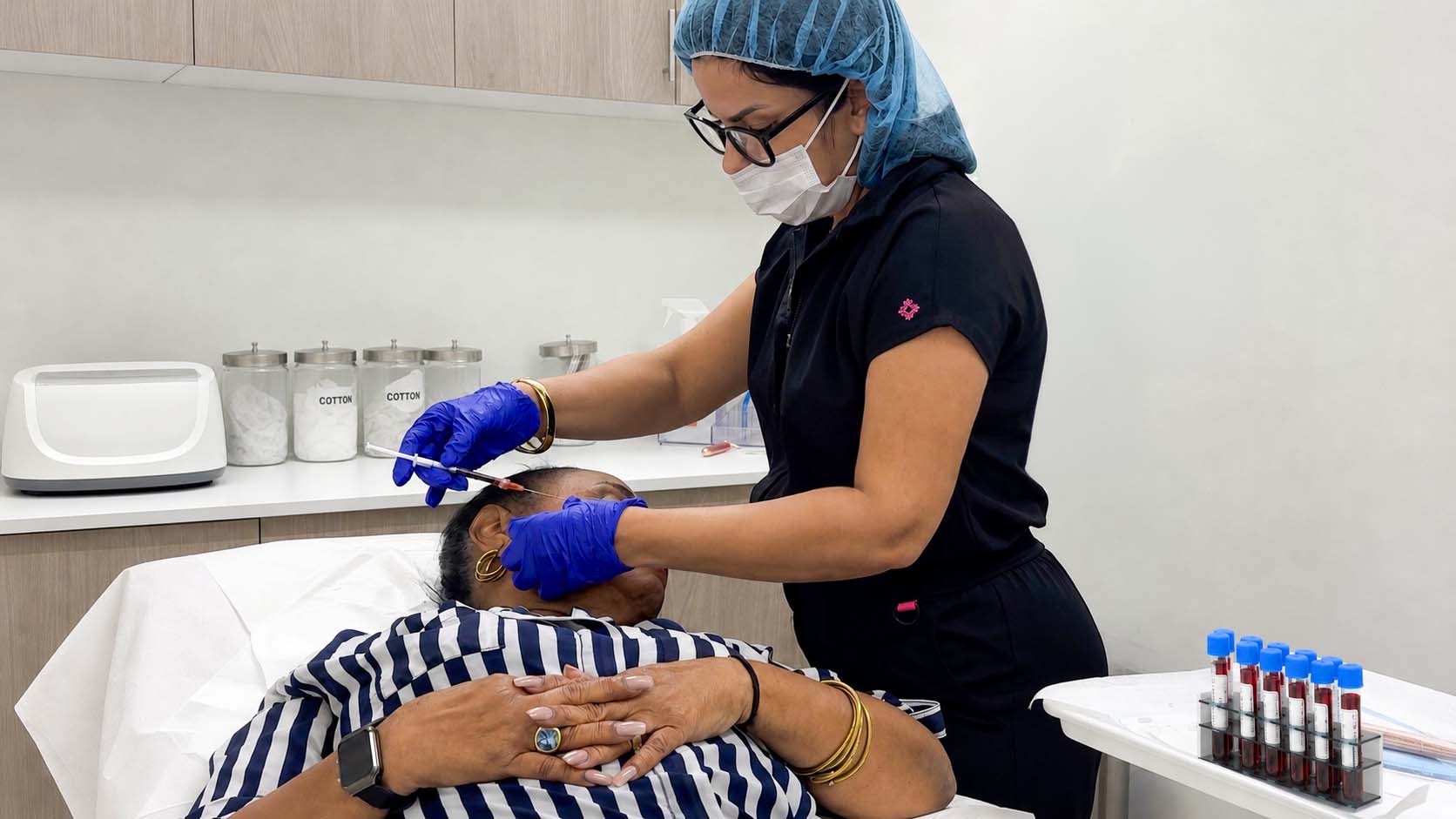
Facial rejuvenation does not always have to mean adding synthetic materials or dramatically changing the way you look.
A growing area of aesthetic medicine focuses instead on regenerative treatments—approaches designed to work with the body’s own biological processes to support healthier-looking skin.
PRF, or Platelet-Rich Fibrin, is one of these treatments.
PRF is prepared from a small sample of the patient’s own blood and contains platelets within a fibrin-based matrix along with naturally occurring signaling proteins commonly referred to as growth factors.
Rather than creating an immediate artificial change, PRF Facial Rejuvenation is intended to support the skin’s natural repair and remodeling processes over time.
At Nature MedSpa, PRF is incorporated into personalized facial rejuvenation plans based on each patient’s skin condition, concerns, medical history, and goals.
In this guide, we’ll explain exactly what PRF is, how it is prepared, what current research tells us about facial rejuvenation, how it differs from PRP, and what patients can realistically expect from treatment.
Table of Contents
- What Is PRF?
- How Is PRF Made?
- How Does PRF Work in the Skin?
- What Can PRF Facial Rejuvenation Help Improve?
- What Does the Scientific Evidence Say?
- PRF vs. PRP: What’s the Difference?
- PRF vs. Dermal Fillers
- PRF + Microneedling
- What Happens During a PRF Facial Treatment?
- Recovery and Aftercare
- When Will You See Results?
- Who May Be a Good Candidate?
- Why Professional Evaluation Matters
- Frequently Asked Questions
What Is PRF?
PRF stands for Platelet-Rich Fibrin.
It is an autologous preparation, meaning that it comes from the patient’s own body.
A small amount of blood is collected and processed to separate and concentrate components used in the treatment.
Unlike a conventional cosmetic product manufactured outside the body, PRF uses biological material obtained directly from the patient.
The resulting preparation contains platelets within a fibrin matrix and associated signaling proteins involved in normal tissue repair.
This is why PRF has become increasingly relevant within regenerative aesthetics.
Instead of attempting to replace the skin’s natural structure, the objective is to support biological processes already involved in healing and tissue remodeling.
How Is PRF Made?
PRF treatment begins with a standard blood draw.
The process generally involves four stages:
1. Blood Draw
A small sample of the patient’s blood is collected.
2. Processing
The blood is placed into a centrifuge and processed according to the treatment protocol.
3. PRF Preparation
Centrifugation separates the blood components and allows the provider to obtain the platelet-rich fibrin preparation required for treatment.
4. Targeted Application
The PRF is applied to carefully selected facial areas according to the patient’s personalized treatment plan.
Because PRF is derived from the patient’s own blood, it represents an autologous regenerative approach rather than the introduction of a traditional synthetic filler.
How Does PRF Work in the Skin?
Platelets are best known for their role in clotting, but they also participate in tissue repair.
They contain signaling proteins that interact with cells involved in healing and remodeling.
The fibrin matrix in PRF provides a biological scaffold in which these platelets and signaling components are concentrated.
When PRF is placed in a targeted area, the goal is to support processes associated with:
- Tissue repair
- Collagen remodeling
- Skin elasticity
- Skin quality
- Cellular renewal
This process is gradual.
PRF is therefore better understood as a regenerative treatment rather than an instant cosmetic correction.
What Can PRF Facial Rejuvenation Help Improve?
Depending on the patient and treatment protocol, PRF may be considered when addressing concerns such as:
- Fine lines
- Early signs of facial aging
- Skin texture
- Reduced elasticity
- Overall skin quality
- Crepey-looking skin
- Certain under-eye concerns
- Dull or tired-looking skin
An important distinction is that PRF does not necessarily produce the same type of result as a filler, resurfacing laser, or neuromodulator.
Its role is different.
The objective is to support gradual biological improvement in skin quality.
What Does the Scientific Evidence Say About PRF?
Regenerative aesthetics is a rapidly developing field, and it is important to distinguish promising evidence from exaggerated marketing claims.
Recent systematic reviews evaluating PRF and related platelet-based preparations for facial rejuvenation have reported encouraging findings, particularly in areas such as skin elasticity and skin thickness.
Research has also investigated changes in wrinkles, texture, pigmentation, and patient satisfaction.
However, results are not equally strong across every outcome, and studies use different preparation methods, treatment protocols, and evaluation techniques.
For that reason, PRF should not be presented as a guaranteed treatment for every sign of facial aging.
Current evidence supports viewing PRF as a promising regenerative option whose results depend on the patient, treatment protocol, area treated, and clinical indication.
This is also why professional evaluation and realistic expectations are essential.
PRF vs. PRP: What’s the Difference?
PRF and PRP are frequently confused because both originate from the patient’s own blood.
PRP stands for Platelet-Rich Plasma.
PRF stands for Platelet-Rich Fibrin.
Both aim to concentrate platelet-derived biological components, but their preparation protocols and final composition differ.
One of the defining characteristics of PRF is its fibrin matrix, which provides a biological scaffold for platelets and other components within the preparation.
Rather than assuming that one is universally “better,” the appropriate platelet-based treatment should depend on the clinical indication and protocol.
Current research continues to evaluate the differences between PRP and PRF and which applications may benefit most from each approach.
PRF vs. Dermal Fillers
PRF and dermal fillers should not be considered interchangeable.
Dermal Fillers
Fillers are primarily designed to provide structural volume, contouring, or support.
Depending on the product and treatment area, the effect may be visible relatively quickly.
PRF
PRF focuses on regenerative support and gradual improvement in tissue and skin quality.
It does not behave like a conventional hyaluronic-acid filler and should not be expected to produce the same immediate volumizing effect.
For patients interested primarily in natural-looking skin renewal rather than significant structural augmentation, PRF may be worth discussing during consultation.
PRF + Microneedling
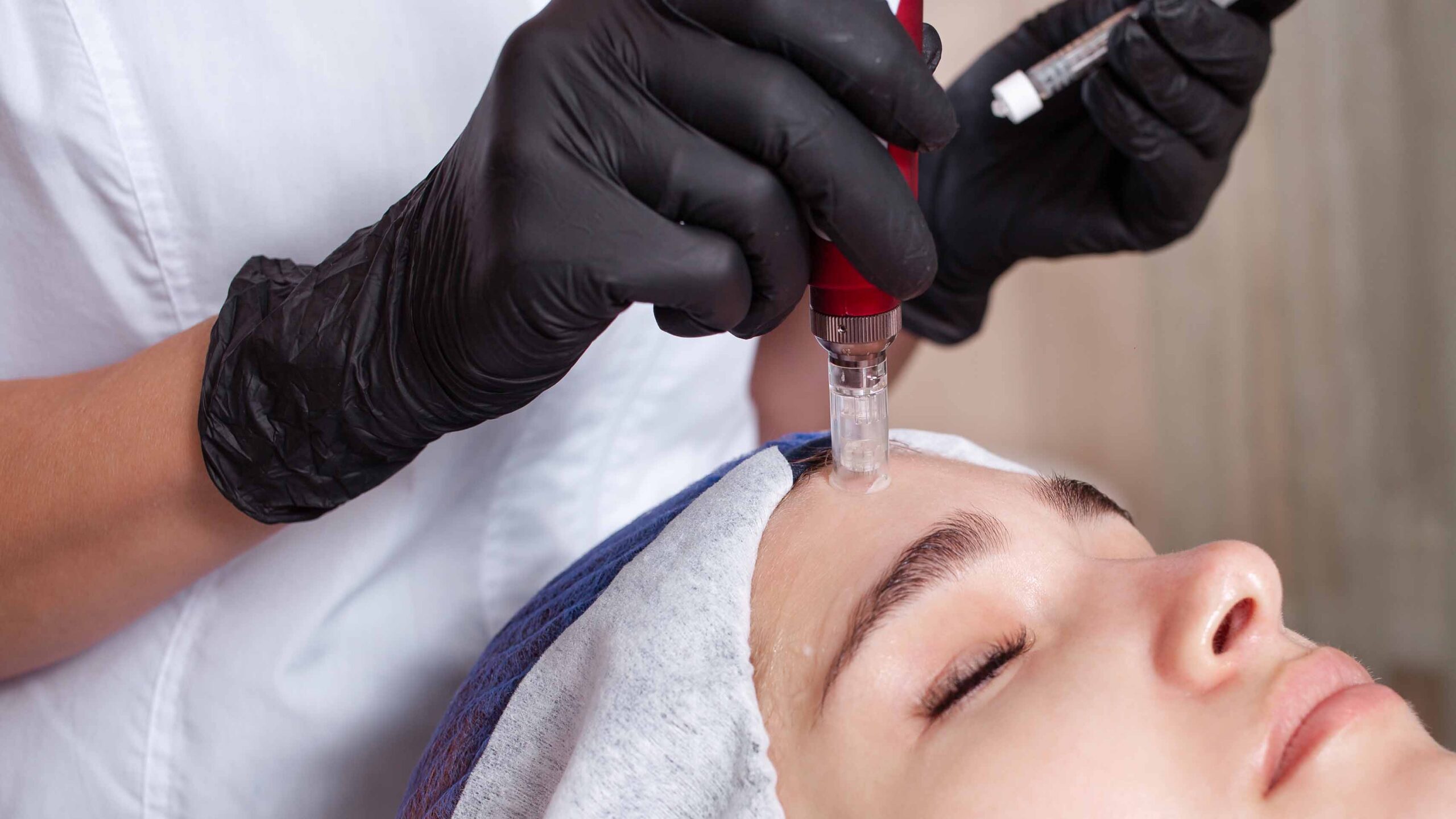
PRF may also be incorporated into a treatment plan with Microneedling.
Microneedling creates controlled microchannels in the skin, initiating a healing response associated with collagen remodeling.
PRF adds an autologous regenerative component derived from the patient’s own blood.
This combination may be considered when the treatment objective includes:
- Skin texture
- Fine lines
- Enlarged-looking pores
- Overall skin quality
- Collagen support
At Nature MedSpa, PRF + Microneedling is offered as a complementary option when appropriate for the patient’s skin and goals.
PRF Facial Rejuvenation vs. Energy-Based Treatments
Another important distinction is between PRF and technologies such as CO₂ Laser or PIXIE™.
PRF Facial Rejuvenation
Focuses primarily on regenerative biological support.
CO₂ Laser Skin Resurfacing
Uses controlled laser energy to resurface damaged skin and stimulate collagen remodeling.
PIXIE™ Multi-Layer Skin Rejuvenation
Combines Radiofrequency Microneedling with Erbium Laser technology to address different levels of the skin.
These treatments do not necessarily compete with each other.
Depending on the patient’s concerns, they may serve different purposes within a comprehensive rejuvenation plan.
What Happens During a PRF Facial Treatment?
Treatment begins with a professional evaluation.
Your provider will review factors such as:
- Skin condition
- Areas of concern
- Medical history
- Current medications
- Previous aesthetic procedures
- Treatment expectations
A small blood sample is then collected and processed to prepare the PRF.
Once prepared, PRF is applied to the targeted areas according to the individualized treatment plan.
At Nature MedSpa, the objective is to use PRF strategically rather than applying the same protocol to every patient.
What Is Recovery Like?
One of the advantages patients often associate with PRF is relatively limited recovery compared with more intensive resurfacing procedures.
Depending on how PRF is applied and which areas are treated, temporary effects may include:
- Redness
- Mild swelling
- Tenderness
- Bruising
- Temporary sensitivity
These effects vary between patients.
When PRF is combined with Microneedling or another procedure, recovery may differ from PRF treatment alone.
Patients should always follow the specific aftercare instructions provided by their treating professional.
When Will You See PRF Results?
PRF is not designed around an instant transformation.
Because the treatment relies on biological processes and tissue remodeling, changes develop gradually.
Some patients may begin noticing improvements over the following weeks, while collagen-related changes can continue developing over time.
The treatment plan may involve more than one session depending on:
- Age
- Skin condition
- Treatment area
- Goals
- Individual biological response
Maintenance recommendations also vary.
The appropriate number and frequency of treatments should therefore be determined individually rather than promised as a universal protocol.
Who May Be a Good Candidate?
PRF Facial Rejuvenation may be worth considering for adults interested in:
- Natural-looking facial rejuvenation
- Improving overall skin quality
- Supporting collagen remodeling
- Addressing early signs of aging
- A regenerative approach using their own biological material
- Gradual rather than dramatic changes
However, being interested in PRF does not automatically make someone a candidate.
Medical history, medications, blood-related conditions, active infections, pregnancy status, treatment area, and other individual factors may affect suitability.
A professional medical evaluation is therefore essential.
Why Professional Evaluation Matters
Regenerative treatments are sometimes marketed as if “natural” automatically means appropriate for everyone.
That is not accurate.
PRF is still a medical aesthetic procedure.
The provider must determine:
- Whether PRF is appropriate
- Which areas should be treated
- Which preparation protocol is suitable
- Whether PRF alone is sufficient
- Whether another technology may better address the concern
- Whether combination treatment makes clinical sense
At Nature MedSpa, treatment planning is led by Yunet Fuentes, MSN, FNP-BC, a Board-Certified Family Nurse Practitioner whose approach combines medical evaluation, regenerative aesthetics, and individualized treatment planning.
Frequently Asked Questions
Is PRF the same as PRP?
No. Both are derived from the patient’s blood, but PRF and PRP differ in preparation and composition. PRF is characterized by a fibrin-based matrix containing concentrated platelet-derived components.
Is PRF a filler?
Not in the conventional sense. PRF is an autologous regenerative preparation and does not behave like a traditional hyaluronic-acid dermal filler.
Does PRF stimulate collagen?
Platelet-derived signaling factors are involved in tissue repair and remodeling, and PRF is used with the goal of supporting these biological processes. Clinical research has reported promising changes in elasticity and skin thickness, although results vary.
Can PRF help fine lines?
Research has investigated PRF and related platelet preparations for wrinkles and fine lines, with encouraging but variable findings. Results depend on the patient and treatment protocol.
Can PRF be used under the eyes?
PRF is used in selected periorbital aesthetic applications, but the under-eye area requires careful professional assessment. Not every under-eye concern has the same cause or should receive the same treatment.
How many PRF sessions do I need?
There is no universal number. Your provider may recommend a series based on your skin condition, goals, response, and treatment area.
Is there downtime after PRF?
Recovery is generally limited, but temporary swelling, redness, tenderness, or bruising may occur. Recovery can differ when PRF is combined with Microneedling.
How quickly will I see results?
PRF works gradually. Changes may develop over several weeks as biological remodeling occurs rather than appearing as an immediate transformation.
How long do PRF results last?
Duration varies according to the patient, treatment protocol, area treated, aging process, lifestyle, and maintenance strategy. Current research has not established one universal duration for all PRF facial applications.
Is PRF safe?
Because PRF is autologous, it avoids some concerns associated with introducing foreign materials. However, treatment still carries procedural considerations and should be performed following appropriate medical evaluation and technique.
Conclusion
PRF Facial Rejuvenation represents a different philosophy of aesthetic treatment.
Rather than attempting to dramatically change facial features, it uses components derived from the patient’s own blood to support the biological processes involved in tissue repair and skin remodeling.
Current research is encouraging, particularly regarding elasticity and skin thickness, while evidence for other outcomes remains variable and continues to evolve.
For patients interested in regenerative aesthetics, PRF may offer a valuable option—but the best results begin with appropriate patient selection, realistic expectations, and a treatment plan based on clinical evaluation rather than trends.
At Nature MedSpa, PRF Facial Rejuvenation is incorporated into personalized regenerative treatment plans designed around each patient’s skin, health, and aesthetic goals.
Interested in a More Regenerative Approach to Facial Rejuvenation?
Schedule a personalized consultation to determine whether PRF Facial Rejuvenation is appropriate for your skin and goals.
Nature MedSpa
📞 (305) 306-8626
💬 WhatsApp: (305) 482-3823