
One of the most common questions in aesthetic medicine is surprisingly simple:
Should I choose PRF or dermal fillers?
The answer depends on what you want to improve.
Although PRF and fillers are sometimes grouped together because both may be used as part of facial rejuvenation, they work in very different ways.
Dermal fillers are designed primarily to restore or add volume, improve contour, and soften selected facial folds or depressions.
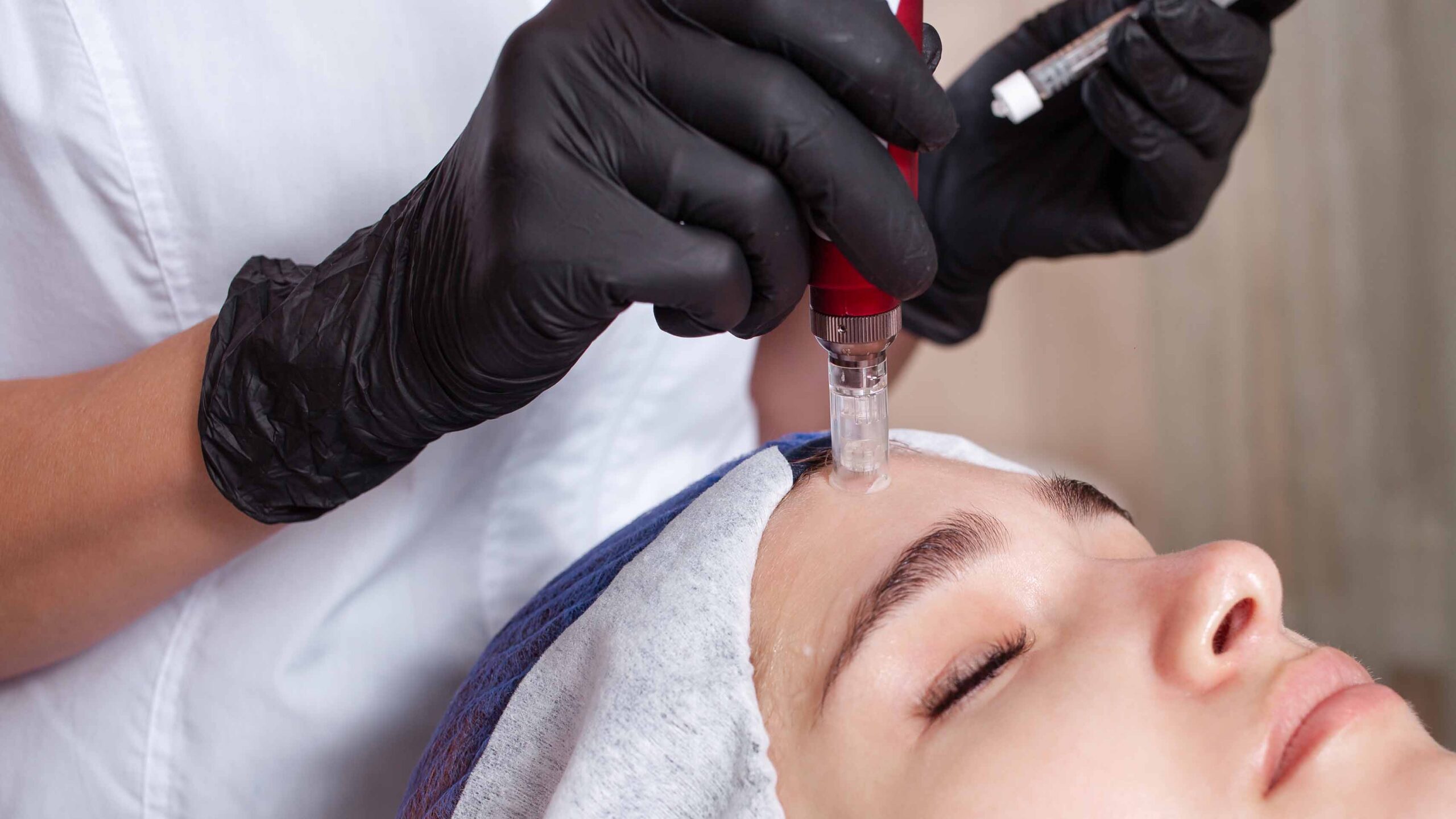
PRF, or Platelet-Rich Fibrin, uses components derived from the patient’s own blood with the goal of supporting tissue quality, collagen remodeling, and gradual regenerative improvement.
Neither approach is universally better.
They solve different problems.
At Nature MedSpa, the decision between PRF and filler begins with a professional evaluation of facial anatomy, skin quality, volume loss, treatment goals, and the type of result the patient wants to achieve.
This guide explains the difference clearly so you can have a more informed conversation with your provider.
Table of Contents
- What Is PRF Facial Rejuvenation?
- What Are Dermal Fillers?
- PRF vs. Fillers: The Main Difference
- Which Treatment Is Better for Volume?
- Which Is Better for Skin Quality?
- PRF vs. Fillers for the Under-Eye Area
- How Quickly Do Results Appear?
- How Long Do Results Last?
- What Is Recovery Like?
- Can PRF and Fillers Be Combined?
- Safety Considerations
- How to Choose the Right Treatment
- Frequently Asked Questions
What Is PRF Facial Rejuvenation?
PRF stands for Platelet-Rich Fibrin.
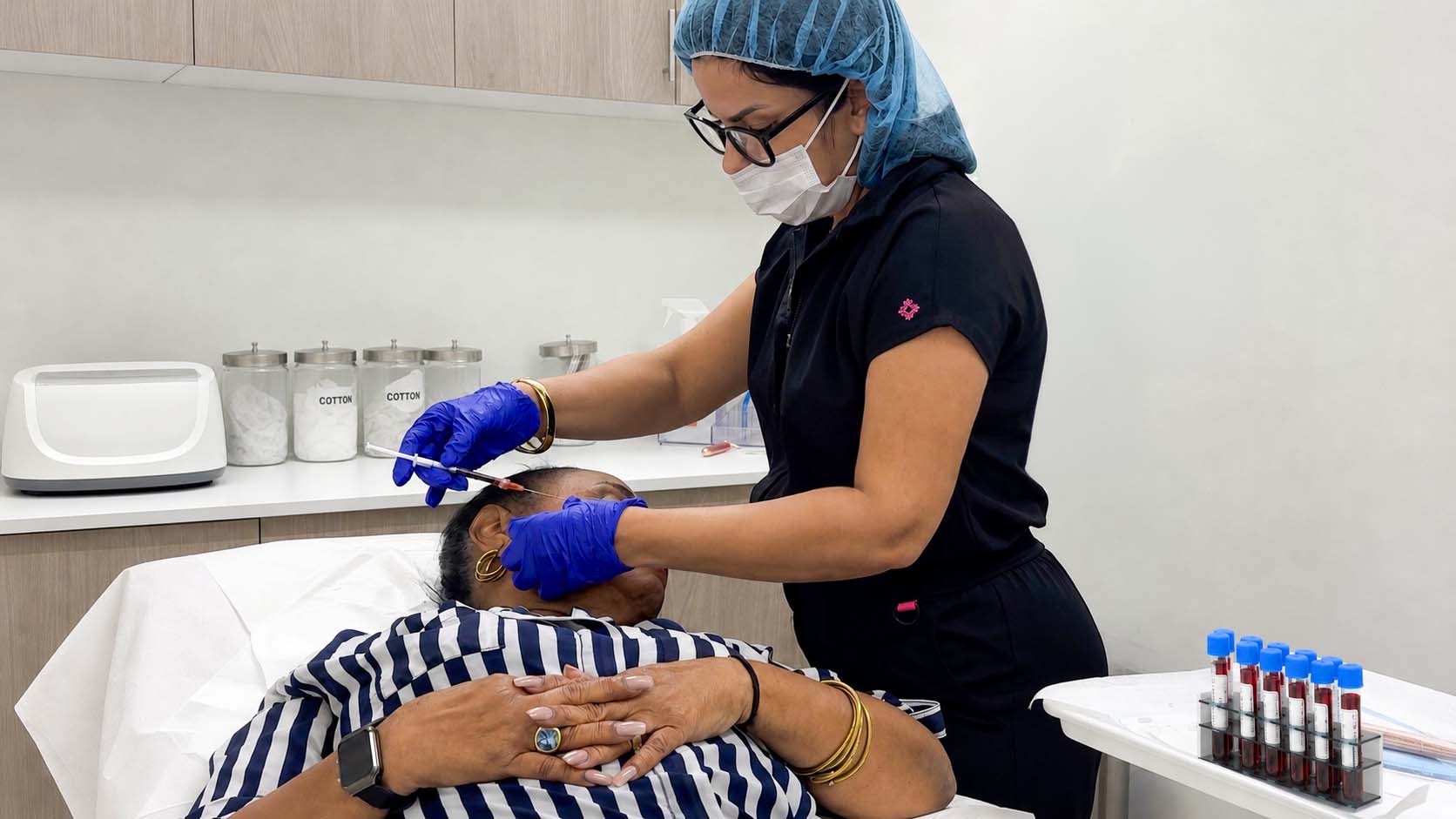
It is prepared from a small sample of the patient’s own blood and contains platelets within a fibrin-based matrix along with signaling proteins involved in normal healing and tissue repair.
In aesthetic medicine, PRF is used with the goal of supporting:
- Skin quality
- Collagen remodeling
- Elasticity
- Fine lines
- Tissue renewal
- Certain under-eye concerns
- Gradual facial rejuvenation
PRF does not behave like a conventional filler.
Rather than creating immediate structural volume, it is intended to support biological improvement over time.
If you want a deeper explanation of how PRF works, read our complete guide to PRF Facial Rejuvenation.
What Are Dermal Fillers?
Dermal fillers are gel-like injectable materials placed beneath the skin to create a smoother or fuller appearance.
Depending on the product and treatment area, fillers may be used to:
- Restore facial volume
- Enhance lips
- Improve cheek projection
- Define the chin or jawline
- Soften selected folds
- Improve certain under-eye hollows
- Correct selected acne scars
The FDA regulates dermal fillers as medical devices and approves specific products for specific treatment areas and indications.
Common temporary filler materials include:
- Hyaluronic acid
- Calcium hydroxylapatite
- Poly-L-lactic acid
The appropriate product depends on the anatomy being treated and the desired result.
PRF vs. Fillers: The Main Difference
The easiest way to understand the difference is this:
PRF
Regenerative support
PRF is used to support skin and tissue quality through the patient’s own biological material.
Dermal Fillers
Structural correction
Fillers are used to create or restore volume and contour.
A patient concerned about skin quality may need a different strategy than someone concerned about volume loss.
That distinction is the foundation of good treatment planning.
Quick Comparison: PRF vs. Fillers
| Feature | PRF Facial Rejuvenation | Dermal Fillers |
| Primary purpose | Regenerative support | Volume and contour |
| Material | Patient’s own blood-derived PRF | Injectable filler material |
| Result style | Gradual | Often more immediate |
| Best for | Skin quality, elasticity, fine lines | Volume loss, contour, augmentation |
| Structural volume | Limited | Yes |
| Collagen support | Regenerative focus | Depends on filler type |
| Treatment philosophy | Biological renewal | Structural enhancement |
| Repeat treatments | Often part of a series | Depends on product and area |
| Recovery | Usually mild | Usually mild, varies by area |
| Key limitation | Not designed for major volume replacement | Does not replace regenerative skin-quality treatment |
Which Treatment Is Better for Volume?
If the primary concern is:
- Flat cheeks
- Significant volume loss
- Lip augmentation
- Chin projection
- Jawline contour
- Deep facial folds
a dermal filler may be the more direct option.
Fillers are specifically designed to add volume or structural support.
PRF does not produce the same immediate volumizing effect and should not be marketed as an equivalent replacement for conventional filler in every situation.
Which Treatment Is Better for Skin Quality?
When the primary concern is:
- Fine lines
- Crepey skin
- Reduced elasticity
- Dull appearance
- Texture
- Early signs of aging
- Overall tissue quality
PRF may be more aligned with the treatment goal.
The regenerative approach focuses on supporting the tissue rather than changing facial structure.
This is why some patients who do not want obvious augmentation are interested in PRF.
PRF vs. Fillers for the Under-Eye Area
The under-eye area is one of the most complex regions of the face.
Dark circles, hollowness, thin skin, pigmentation, vascular visibility, fluid retention, and structural anatomy can all create a tired appearance—but they do not have the same cause.
PRF may be considered when:
- Skin quality is a major concern
- The tissue appears thin or crepey
- A gradual regenerative approach is preferred
Fillers may be considered when:
- Structural hollowing is the primary issue
- Volume deficiency is clearly contributing to the appearance
However, not every patient is a good candidate for under-eye filler.
The FDA notes that dermal fillers are approved for specific anatomical uses, and treatment in areas around the eyes requires careful product selection, anatomy knowledge, and professional expertise.
This is precisely why a medical evaluation is essential before choosing either option.
How Quickly Do Results Appear?
PRF
PRF works gradually.
Because the treatment relies on biological remodeling, visible changes may develop over several weeks rather than immediately.
Patients often choose PRF when they prefer subtle, progressive improvement.
Fillers
Dermal fillers typically create visible structural change shortly after treatment, although swelling may temporarily affect the final appearance.
The difference in timing is significant:
PRF = gradual biological improvement
Fillers = more immediate structural change
How Long Do Results Last?
There is no universal duration for either treatment.
PRF
Duration varies based on:
- Age
- Skin condition
- Treatment area
- Number of sessions
- Biological response
- Lifestyle
- Maintenance plan
PRF is often performed as a series rather than a one-time correction.
Dermal Fillers
Duration depends heavily on:
- Product material
- Treatment area
- Amount used
- Patient metabolism
- Facial movement
- Individual anatomy
The FDA notes that many temporary fillers are gradually absorbed by the body and may require repeat treatment to maintain results.
What Is Recovery Like?
Both treatments are generally considered minimally invasive, but temporary side effects can occur.
PRF Recovery
Possible short-term effects include:
- Redness
- Mild swelling
- Tenderness
- Bruising
Filler Recovery
Possible common effects include:
- Swelling
- Bruising
- Redness
- Tenderness
- Pain
- Itching
Most temporary effects improve within days to weeks, but every medical procedure carries risks.
Can PRF and Fillers Be Combined?
Yes, in selected patients.
Because PRF and fillers address different aspects of facial aging, they may complement each other.
For example:
- Filler may restore structural volume
- PRF may support skin quality and tissue renewal
The goal is not necessarily to choose one treatment forever.
The better question may be:
What combination of treatments best addresses the anatomy, skin quality, and goals of this individual patient?
Combination treatment should always be planned carefully rather than performed automatically.
Safety Considerations
Both PRF and dermal fillers are medical aesthetic procedures.
PRF Considerations
Because PRF is autologous, it uses the patient’s own biological material.
However, that does not mean the procedure is risk-free.
Potential procedural concerns include:
- Bruising
- Swelling
- Infection
- Discomfort
- Inappropriate treatment selection
Dermal Filler Considerations
The FDA identifies several common and uncommon risks associated with dermal fillers, including:
- Bruising
- Swelling
- Pain
- Infection
- Nodules
- Inflammatory reactions
A rare but serious complication can occur if filler is unintentionally injected into a blood vessel. This can result in tissue injury and, in very rare cases, vision abnormalities or stroke.
For this reason, filler treatment should be performed by a qualified healthcare professional with appropriate training in facial anatomy, product selection, injection technique, and complication management.
PRF Is Not Automatically “Safer” Because It Is Natural
This distinction is important.
Marketing language sometimes creates the impression that:
Natural = risk-free
That is not accurate.
PRF is autologous, which means it uses material derived from the patient. This may reduce certain concerns related to introducing foreign materials, but the procedure still requires:
- Appropriate patient selection
- Sterile technique
- Knowledge of anatomy
- Correct preparation
- Proper application
- Medical evaluation
Likewise, FDA-approved dermal fillers have established indications and safety information when used appropriately by trained professionals.
The safest treatment is not defined only by the material used.
It is defined by choosing the right treatment for the right patient and performing it correctly.
How Do You Choose the Right Treatment?
Start with the problem you are trying to solve.
Consider PRF if your goal is primarily:
- Better skin quality
- Gradual rejuvenation
- Collagen support
- Fine-line improvement
- A regenerative approach
- Subtle, natural-looking changes
Consider dermal fillers if your goal is primarily:
- Restoring volume
- Improving facial contour
- Enhancing lips
- Supporting cheeks
- Correcting selected structural hollows
- More immediate structural change
You may benefit from both if:
You have a combination of volume loss and declining skin quality.
Why Facial Assessment Matters More Than the Product
Good aesthetic medicine should not begin with:
“Which product do you want?”
It should begin with:
“What is causing the concern you see?”
For example, a tired-looking under-eye may result from:
- Hollowing
- Pigmentation
- Thin skin
- Vascular visibility
- Fluid retention
- Facial anatomy
Those problems require very different solutions.
At Nature MedSpa, treatment planning is led by Yunet Fuentes, MSN, FNP-BC, a Board-Certified Family Nurse Practitioner who evaluates facial anatomy, skin quality, medical history, and treatment goals before recommending a regenerative or structural approach.
Frequently Asked Questions
Is PRF better than filler?
Neither is universally better. PRF and fillers serve different purposes. PRF focuses on regenerative tissue support, while fillers primarily restore volume and contour.
Can PRF replace filler?
Sometimes PRF may be appropriate for a patient who wants gradual rejuvenation without significant augmentation, but it cannot replace the structural volume provided by filler in every situation.
Which looks more natural?
Natural-looking results depend more on treatment planning, appropriate patient selection, and technique than on choosing PRF or filler alone.
Is PRF safer because it comes from my own blood?
PRF is autologous, but it is still a medical procedure with potential risks. “Natural” should not be interpreted as “risk-free.”
Which treatment works faster?
Dermal fillers generally provide more immediate structural change. PRF develops more gradually through biological remodeling.
Which is better for under-eye hollows?
It depends on the cause. Structural hollowing may respond differently than thin or crepey skin. A professional evaluation is essential.
Does PRF stimulate collagen?
PRF is used with the goal of supporting biological repair and collagen remodeling. Current research reports promising findings for skin elasticity and texture, although outcomes vary.
How long does filler last?
Duration depends on the filler type, treatment area, and individual patient factors. Many temporary fillers gradually absorb over time.
Can PRF and fillers be used together?
Yes. In selected patients, PRF may complement filler by addressing skin quality while filler addresses structural volume.
Which treatment has less downtime?
Both often involve relatively limited downtime, but swelling and bruising may occur with either procedure.
Conclusion
The choice between PRF and dermal fillers should not be based on trends.
It should be based on anatomy, skin quality, treatment goals, and the type of change the patient wants.
PRF Facial Rejuvenation offers a regenerative approach designed to support tissue quality and gradual renewal.
Dermal fillers provide a more structural approach designed to restore volume, enhance contour, and correct selected facial deficiencies.
For some patients, one approach may be enough.
For others, the most balanced result may come from combining regenerative and structural treatments strategically.
The key is professional evaluation.
At Nature MedSpa, treatment planning focuses on preserving natural features, avoiding unnecessary treatment, and selecting the approach that best matches each patient’s individual needs.
CTA
Not Sure Whether PRF or Fillers Are Right for You?
Schedule a personalized facial evaluation at Nature MedSpa.
Yunet Fuentes, MSN, FNP-BC will assess your skin quality, facial structure, and goals to help determine which approach is most appropriate.
📞 (305) 306-8626
💬 WhatsApp: (305) 482-3823