Hair loss does not always begin with an obvious bald spot.
For many people, the first changes are subtle.
You may notice more hair in the shower. Your ponytail may feel slightly thinner. Your part may appear wider in photographs. Your hairline may seem different than it did a year ago.
Individually, these changes do not necessarily mean that you are experiencing progressive hair loss.
Hair naturally grows, rests, sheds, and replaces itself as part of its normal cycle.
The important question is whether you are seeing temporary shedding or a persistent change in hair density, distribution, or growth.
Recognizing those changes early can be valuable because different types of hair loss have different causes—and different treatment strategies.
At Nature MedSpa, hair restoration begins with evaluating the pattern of thinning, scalp condition, history, and individual goals before determining whether regenerative treatment such as PRF may be appropriate.
Here are some of the early signs worth paying attention to.
Table of Contents
- Is It Normal to Lose Hair Every Day?
- Why Early Hair Loss Can Be Difficult to Recognize
- 7 Early Signs of Hair Loss
- Early Hair Loss in Men
- Early Hair Loss in Women
- Hair Shedding vs. Progressive Hair Loss
- What Causes Early Hair Loss?
- Why Early Evaluation Matters
- Can Early Hair Loss Be Treated?
- Where PRF May Fit Into Hair Restoration
- What Happens During a Hair and Scalp Evaluation?
- When Should You Seek Professional Evaluation?
- Frequently Asked Questions
Is It Normal to Lose Hair Every Day?
Yes.
Hair shedding is a normal part of the hair growth cycle.
Hair follicles move through different biological phases, including periods of active growth, transition, rest, and shedding.
This means finding some hair in your shower, brush, clothing, or pillow does not automatically indicate hair loss.
The more useful question is:
Has something changed from what is normal for you?
A persistent increase in shedding combined with visible changes in density, hairline, part width, or scalp visibility may deserve closer attention.
Why Early Hair Loss Can Be Difficult to Recognize
Hair loss usually develops gradually.
The visual difference from one day to the next can be extremely small, making it difficult to notice until a significant change has occurred.
Hairstyle can also disguise thinning.
Long hair, curls, styling products, extensions, different parts, and changes in lighting can all affect how dense the hair appears.
That is why early hair loss is often recognized through a pattern of changes over time rather than one isolated observation.
7 Early Signs of Hair Loss
1. Increased Hair Shedding
One of the first changes people notice is more hair than usual:
- In the shower
- On the pillow
- In a hairbrush
- On clothing
- Around the bathroom
- After washing or styling
A temporary increase in shedding can occur for many reasons and does not automatically indicate permanent hair loss.
What matters is whether the increased shedding persists or is accompanied by other changes.
2. A Widening Hair Part
A progressively wider part can be an early sign of reduced hair density, particularly in women.
You may notice:
- More visible scalp along the part
- A part that appears wider in photographs
- Greater difficulty covering the scalp when styling
- Less density around the center of the scalp
Comparing photographs taken under similar lighting and from the same angle can sometimes make gradual changes easier to recognize.
3. A Receding or Changing Hairline
For some patients, early hair loss becomes visible around the hairline.
Changes may include:
- Recession around the temples
- A gradually higher hairline
- Increased visibility of the forehead
- Changes in the shape of the frontal hairline
This pattern is particularly common in male pattern hair loss, although changes around the hairline can occur for other reasons as well.
4. Your Ponytail Feels Thinner
Sometimes the first clue is not what you see—it is what you feel.
People with longer hair may notice that:
- Their ponytail circumference has decreased
- Hair ties wrap around more times than before
- Braids appear thinner
- Hairstyles no longer have the same volume
This can indicate an overall reduction in density even before significant scalp visibility develops.
5. More Visible Scalp
If you begin seeing more scalp through your hair under normal lighting, overall density may be changing.
This may be especially noticeable:
- At the crown
- Along the center part
- Near the temples
- Under bright overhead lighting
- When the hair is wet
Changes in scalp visibility should be evaluated as part of the overall pattern rather than as a single diagnostic sign.
6. Changes in Hair Thickness
Hair loss is not always simply about the number of hairs.
Individual hairs may gradually become finer.
This process is commonly referred to as miniaturization in certain types of patterned hair loss.
You may notice that hair:
- Feels finer
- Has less volume
- Is more difficult to style
- Does not appear as dense as before
- Contains a mixture of thicker and noticeably finer strands
This can be an important early change even when hair is still present throughout the affected area.
7. Slower or Uneven Hair Growth
Another potential clue is a change in how hair appears to grow.
Certain areas may seem:
- Slower to gain length
- Less dense after a haircut
- More fragile
- Uneven compared with surrounding areas
Hair breakage can sometimes create a similar appearance, so determining whether the issue involves the hair shaft or the follicle itself is important.
Early Signs of Hair Loss in Men
Male pattern hair loss commonly develops in recognizable patterns.
Early changes may include:
- Receding temples
- Changes in the frontal hairline
- Thinning at the crown
- Reduced density on the top of the scalp
- Increasing difference between the sides and top of the hair
However, not every man experiences the same progression.
Sudden or unusual hair loss may have another cause and should not automatically be assumed to be genetic.
Early Signs of Hair Loss in Women
Hair thinning in women can look very different.
Instead of an obvious receding hairline, women may notice:
- A widening center part
- Diffuse thinning across the scalp
- Reduced ponytail volume
- Increased scalp visibility
- Increased shedding
- Reduced density around the temples
Hormonal changes, nutritional factors, stress, illness, medications, and other medical conditions can also contribute.
That is why determining the underlying pattern is particularly important before beginning treatment.
Hair Shedding vs. Progressive Hair Loss
These terms are often used interchangeably, but they are not necessarily the same.
Hair Shedding
Hair enters a shedding phase as part of its natural growth cycle.
Temporary increases in shedding may occur after:
- Significant stress
- Illness
- Surgery
- Rapid weight change
- Hormonal changes
- Pregnancy
- Certain medications
- Nutritional changes
Progressive Hair Loss
Progressive hair loss may involve ongoing changes such as:
- Follicle miniaturization
- Gradual reduction in density
- Receding hairline
- Widening part
- Increasing scalp visibility
This distinction matters because the appropriate response depends on the underlying cause.
What Causes Early Hair Loss?
Hair loss is not one single condition.
Potential contributors include:
- Genetics
- Hormonal changes
- Aging
- Stress
- Nutritional deficiencies
- Thyroid conditions
- Certain medications
- Recent illness
- Postpartum changes
- Scalp disorders
- Traction from hairstyles
- Autoimmune conditions
- Damage to the hair shaft
Sometimes more than one factor is involved.
For this reason, simply seeing hair thinning does not tell you what treatment you need.
Identifying the cause comes first.
Why Early Evaluation Matters
Waiting until hair loss becomes obvious can reduce the range of options available.
This is especially relevant for regenerative treatments.
Treatments designed to support existing follicles depend on there being follicles capable of responding.
Once an area has experienced advanced follicular loss, regenerative treatment cannot simply create entirely new follicles.
Early evaluation can therefore help determine:
- Whether true thinning is occurring
- The pattern of hair loss
- Whether follicles appear to be miniaturizing
- Whether scalp health may be contributing
- Whether further medical investigation may be needed
- Whether treatment should begin now or simply be monitored
Early evaluation does not automatically mean early treatment.
Sometimes monitoring is the appropriate next step.
Can Early Hair Loss Be Treated?
Depending on the cause, several approaches may be considered.
These can include:
- Addressing underlying medical or nutritional factors
- Changes in hair-care practices
- Medical therapies
- Topical therapies
- Regenerative treatments
- Hair restoration procedures
- Combination strategies
The correct treatment depends on the diagnosis.
At Nature MedSpa, one regenerative option available for selected patients is Hair Restoration with PRF.
Where PRF May Fit Into Hair Restoration
PRF stands for Platelet-Rich Fibrin.
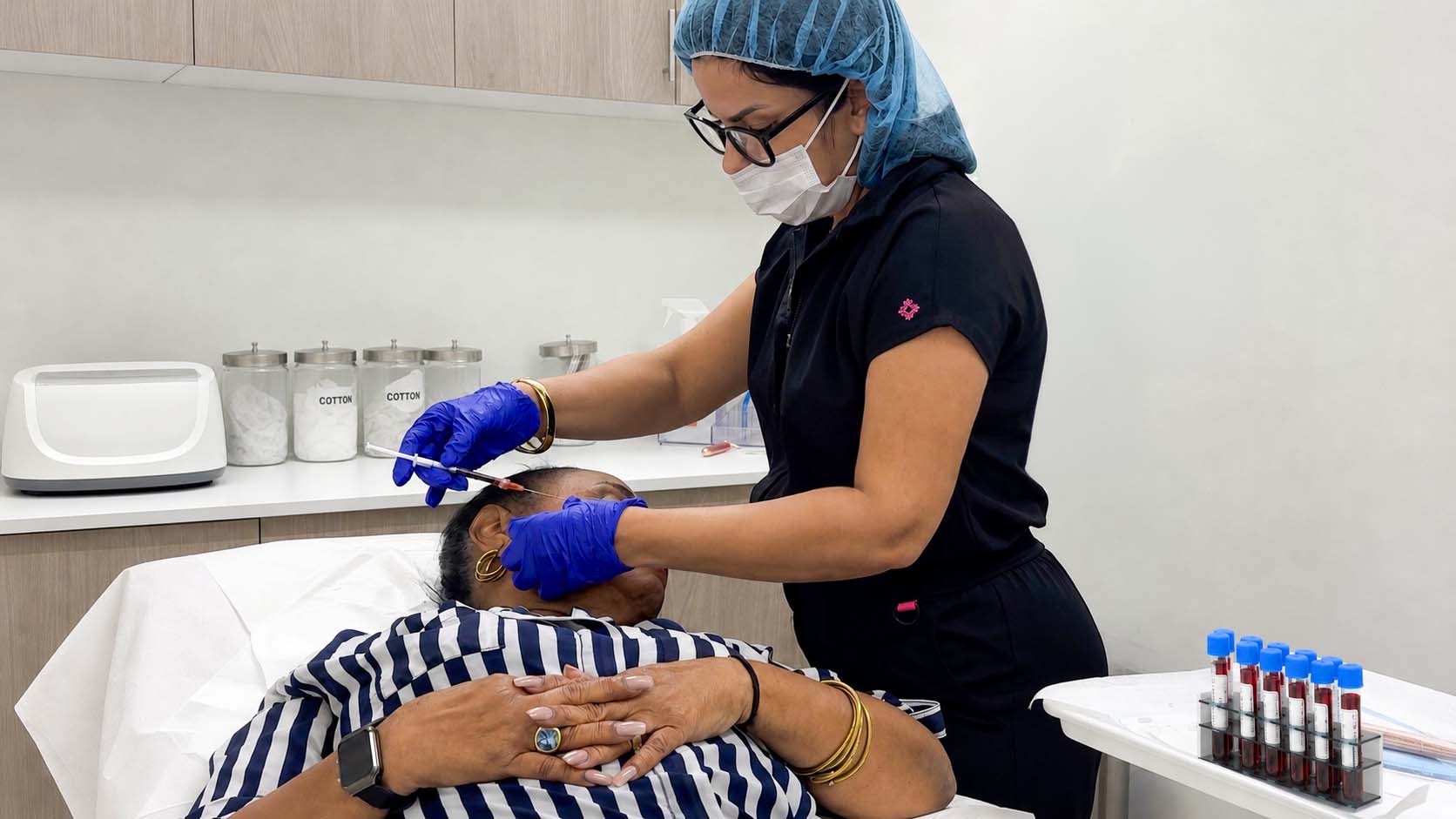
It is prepared from a small sample of the patient’s own blood and contains platelets within a fibrin matrix along with biological signaling components associated with tissue repair.
When used for hair restoration, PRF is intended to support the environment surrounding existing hair follicles.
It may be considered for selected patients experiencing early or progressive thinning where follicles remain present.
PRF does not:
- Create new follicles
- Guarantee hair regrowth
- Correct every cause of hair loss
- Replace appropriate medical evaluation
- Replace transplantation when structural follicular restoration is required
For a complete explanation of the procedure, read our guide to Hair Restoration with PRF.
Why PRF May Be More Relevant Earlier
Think of regenerative hair restoration as supporting what is still there.
When follicles are present but becoming weaker or miniaturized, there may be biological structures available to support.
When follicles are no longer present, the situation is different.
This is one reason identifying progressive thinning earlier may be valuable.
However, the presence of early thinning does not automatically mean PRF is the appropriate treatment.
The cause of hair loss must still be considered.
What Happens During a Hair and Scalp Evaluation?
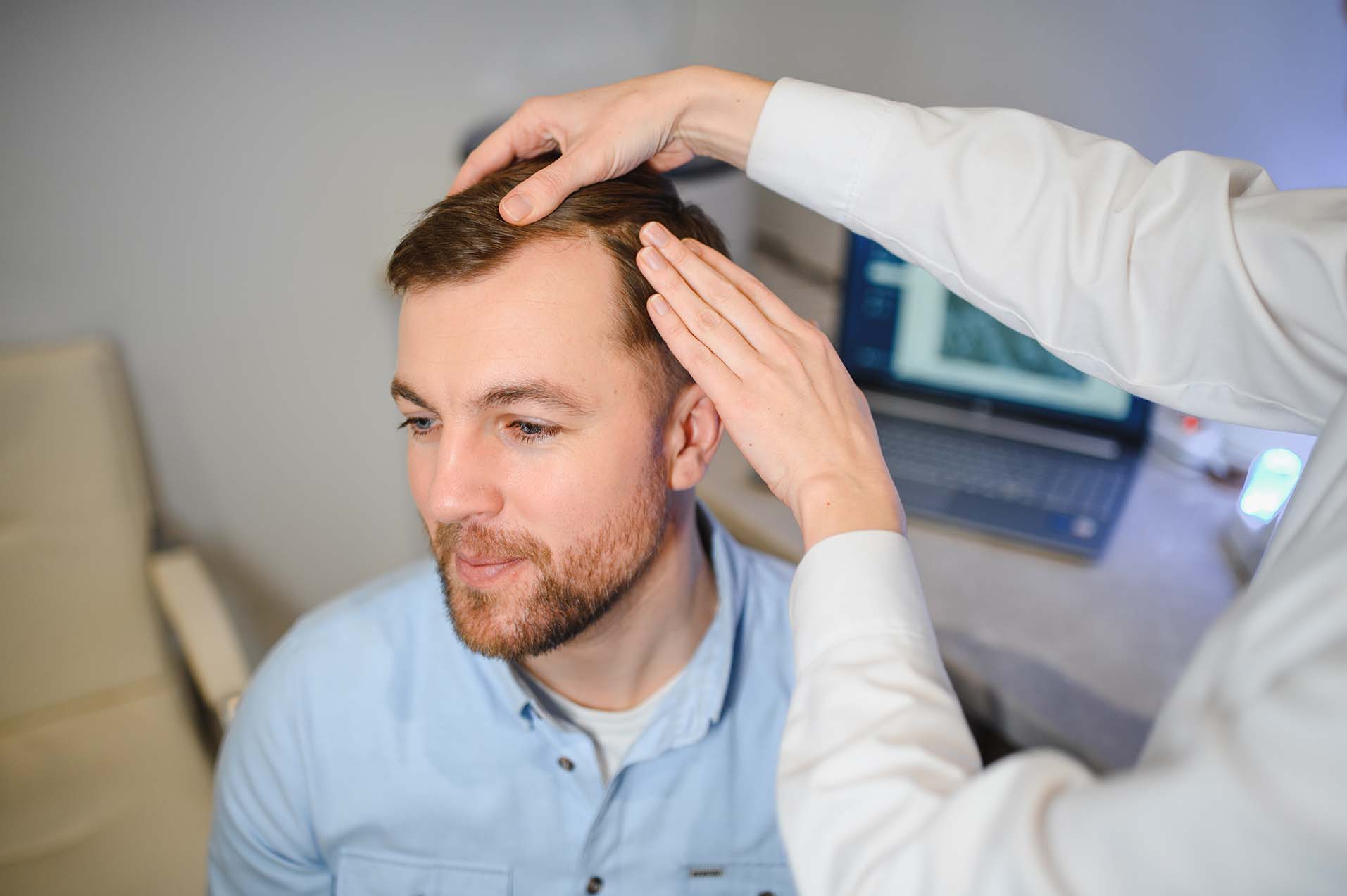
A professional hair evaluation should involve more than simply looking at a bald spot.
The provider may review:
Pattern of Hair Loss
Where is thinning occurring?
Timeline
Did the change happen gradually or suddenly?
Hair Density
Has overall density decreased?
Scalp Condition
Are there visible signs of inflammation, irritation, or other scalp concerns?
Medical History
Have there been illnesses, hormonal changes, medications, stressors, or other relevant factors?
Family History
Is patterned hair loss common in the family?
Previous Treatments
What has already been tried, and how did the hair respond?
These factors help determine whether regenerative treatment may be appropriate or whether additional medical evaluation is warranted.
How to Track Early Hair Changes at Home
If you suspect your hair is changing, tracking it objectively can be more useful than checking the mirror every day.
Consider taking photographs:
- Once per month
- In the same location
- Under similar lighting
- With the same hairstyle
- From the same angles
Useful views include:
- Front hairline
- Both temples
- Center part
- Crown
- Top of scalp
This creates a more consistent visual record.
Daily photographs are generally unnecessary because meaningful changes in hair density occur too slowly for useful day-to-day comparison.
When Should You Seek Professional Evaluation?
Consider professional evaluation if you notice:
- Persistent increased shedding
- Progressive widening of your part
- Receding hairline
- Increasing scalp visibility
- Noticeably reduced density
- Sudden or patchy hair loss
- Scalp symptoms accompanying hair loss
- Hair loss following medication or significant health changes
- Thinning that continues to progress
Sudden, patchy, unexplained, or rapidly progressing hair loss may require evaluation by an appropriate healthcare professional to investigate potential underlying causes.
Frequently Asked Questions
What are the first signs of hair loss?
Early signs may include increased shedding, a widening part, receding temples, reduced density, a thinner ponytail, increased scalp visibility, or changes in individual hair thickness.
How do I know if my hair is actually thinning?
Look for persistent changes over time rather than relying on one day of shedding. Comparing standardized photographs can help identify gradual changes in density or hairline.
Is losing hair in the shower normal?
Some shedding is normal. A persistent increase compared with your usual pattern, particularly when combined with visible thinning, may warrant evaluation.
Does a widening part mean hair loss?
A progressively widening part can be associated with reduced hair density, particularly in women, but it should be evaluated alongside other symptoms and potential causes.
Is a receding hairline always male pattern baldness?
No. Although recession is commonly associated with male pattern hair loss, other conditions and factors can affect the hairline.
Can stress cause hair loss?
Significant physical or emotional stress can contribute to temporary increases in hair shedding in some people. Other causes should also be considered when shedding persists.
Can early hair loss grow back?
That depends on the cause and condition of the follicles. Some forms of shedding can improve when the underlying trigger resolves, while progressive forms of hair loss may require ongoing management.
When should I start treating hair loss?
Treatment should begin when there is an appropriate diagnosis and clinical reason to treat—not simply at a particular age or amount of shedding.
Can PRF help early hair thinning?
PRF may be considered for selected patients with existing follicles, but suitability depends on the cause and pattern of hair loss.
Can PRF restore completely bald areas?
PRF cannot create new follicles. Areas where follicles are no longer present may require a different restoration strategy.
Conclusion
The earliest signs of hair loss are often subtle.
More shedding, a slightly wider part, a changing hairline, finer strands, or a reduction in overall density may develop long before an obvious bald area appears.
But noticing one of these signs does not automatically mean permanent hair loss.
The most important step is identifying whether the change is persistent and why it is happening.
Early evaluation can help distinguish temporary shedding from progressive thinning and determine whether monitoring, medical investigation, regenerative treatment, or another strategy is appropriate.
For patients with existing follicles who may benefit from regenerative support, Hair Restoration with PRF can be considered as part of a personalized treatment plan.
At Nature MedSpa, the objective is not simply to treat hair loss—it is to understand the pattern first and choose an appropriate strategy from there.
Noticing Changes in Your Hair?
You don’t have to wait until thinning becomes obvious to have it evaluated.
Schedule a personalized Hair & Scalp Evaluation at Nature MedSpa to assess your hair density, thinning pattern, scalp condition, and potential treatment options.
Nature MedSpa
📞 (305) 306-8626
💬 WhatsApp: (305) 482-3823