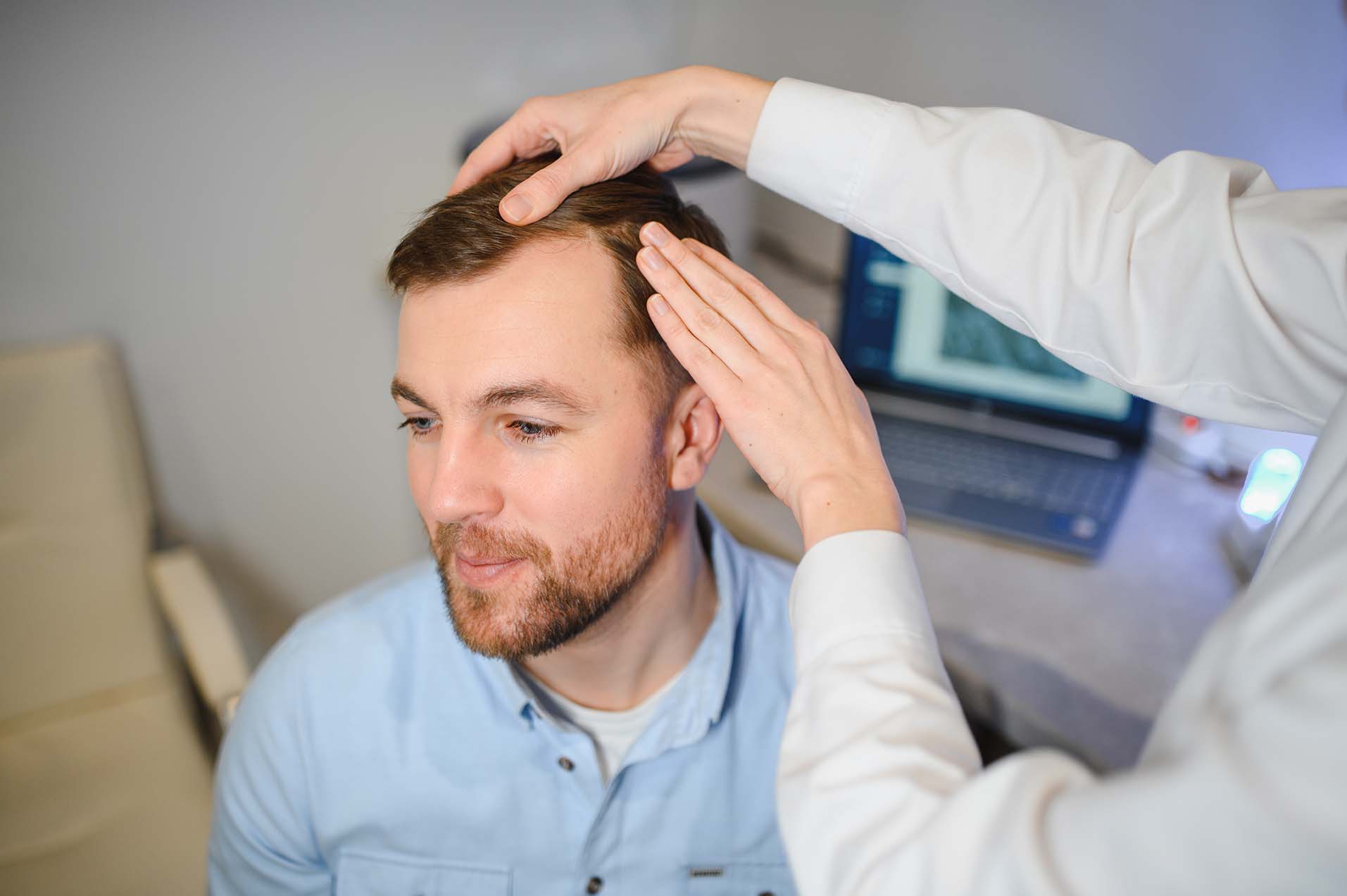


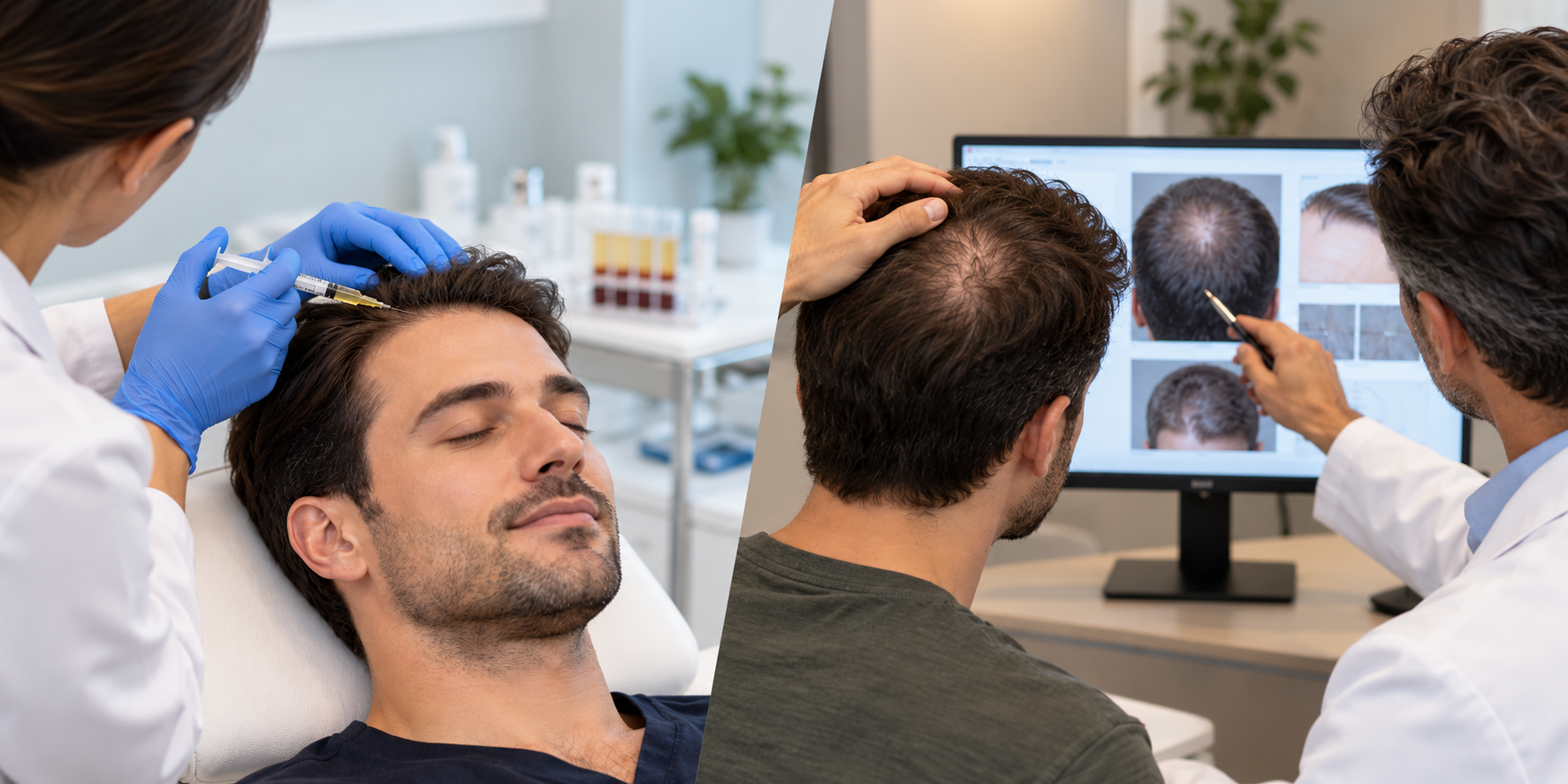
When hair begins to thin, one of the most common questions is whether it can be supported with a regenerative treatment such as Platelet-Rich Fibrin (PRF) or whether a hair transplant is eventually necessary.
Although both approaches are used within hair restoration, they do fundamentally different things.
PRF works with the patient’s own blood-derived components and is used to support the environment surrounding existing hair follicles.
A hair transplant is a surgical procedure that physically relocates healthy follicular units from one area of the scalp to another.
That leads to the most important distinction in this comparison:
PRF works with follicles that are already there. A hair transplant moves follicles to areas where additional follicles are needed.
Understanding that difference makes it much easier to understand when each option may—or may not—make sense.
Written & Medically Reviewed by Yunet Fuentes, MSN, FNP-BC
Board-Certified Family Nurse Practitioner
Clinical Director, Nature MedSpa
Table of Contents
- PRF vs. Hair Transplant at a Glance
- What Is PRF Hair Restoration?
- What Is a Hair Transplant?
- The Biggest Difference: Existing Follicles vs. Transplanted Follicles
- PRF for Early Hair Thinning
- Hair Transplant for More Advanced Hair Loss
- Can PRF Replace a Hair Transplant?
- Can a Hair Transplant Stop Future Hair Loss?
- PRF vs. Hair Transplant Recovery
- Results and Maintenance
- Can PRF and Hair Transplant Be Combined?
- Who May Be a Candidate for PRF?
- Who May Be a Candidate for Hair Transplantation?
- Why Diagnosis Comes First
- Frequently Asked Questions
PRF vs. Hair Transplant at a Glance
| Feature | PRF Hair Restoration | Hair Transplant |
|---|---|---|
| Treatment type | Minimally invasive regenerative procedure | Surgical hair restoration |
| Primary strategy | Supports existing follicles and scalp environment | Moves follicular units from donor to recipient areas |
| Uses patient’s own tissue? | Yes — blood-derived PRF | Yes — patient’s own hair follicles |
| Creates new follicles? | No | No |
| Moves follicles? | No | Yes |
| Best suited for | Selected patients with existing follicles and thinning | Selected patients who need additional follicular coverage |
| Donor area required? | No | Yes |
| Surgery required? | No | Yes |
| Typical treatment approach | Series of sessions with possible maintenance | Surgical procedure; sometimes more than one session |
| Advanced bald areas | Limited role when viable follicles are absent | May provide coverage if adequate donor follicles are available |
| Stops future native hair loss? | Not guaranteed | No |
| Professional evaluation required? | Yes | Yes |
The table makes the treatments look easy to compare, but determining which approach is appropriate requires understanding what is actually happening inside the scalp.
What Is PRF Hair Restoration?
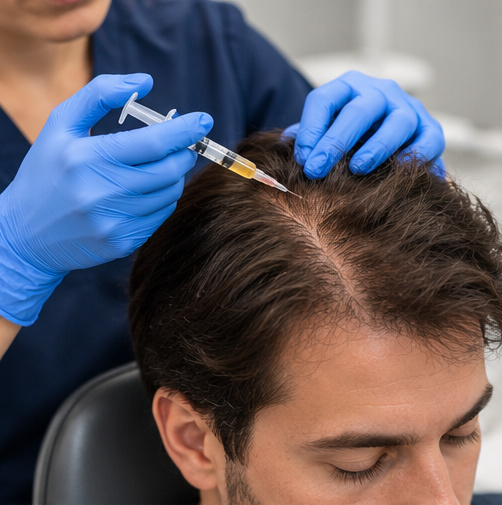
Platelet-Rich Fibrin (PRF) is an autologous blood-derived preparation.
A small amount of the patient’s blood is collected and processed to concentrate platelets and other biological components within a fibrin-based matrix.
The resulting preparation can then be introduced into selected areas of the scalp.
PRF has gained interest as a regenerative approach for androgenetic alopecia and other hair-restoration applications. A 2024 review of PRF in androgenetic alopecia reported encouraging findings across several small clinical studies, while also emphasizing that protocols and clinical evidence remain limited and require additional research.
The goal is not to implant new follicles.
Instead, PRF may be used to support the biological environment surrounding follicles that already exist.
That distinction is critical.
PRF Does Not Create New Hair Follicles
PRF should not be described as:
- creating new follicles
- curing baldness
- guaranteeing regrowth
- replacing hair transplantation in every patient
- restoring unlimited density
Instead, the appropriate concept is:
Existing follicles + regenerative support + individualized treatment
A systematic review of injectable PRF found promising changes in hair density and growth in the limited alopecia studies available but concluded that larger controlled studies and standardized protocols are still needed.
For a deeper explanation of this treatment, read:
What Is a Hair Transplant?
Hair transplantation takes a different approach.
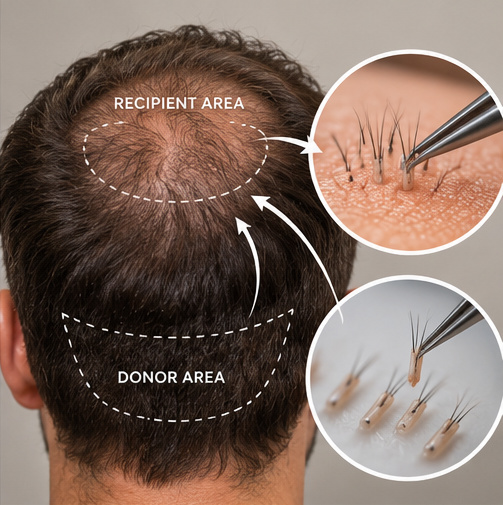
Rather than attempting to support follicles already present in a thinning area, a surgeon removes healthy follicular units from a donor region and places them into areas where increased hair coverage is desired.
Modern hair transplantation is based on moving follicular units while attempting to preserve their natural characteristics.
A recent review describes hair transplantation as being based on the principle of donor dominance, meaning transplanted hair retains important characteristics of the donor region after transplantation.
Modern techniques primarily include:
FUE — Follicular Unit Extraction
Individual follicular units are removed from the donor area and transplanted into the recipient area.
FUT — Follicular Unit Transplantation
A strip of tissue containing follicles is removed from the donor area, and follicular units are subsequently prepared for transplantation.
Both remain established approaches in contemporary hair-restoration surgery.
Hair transplantation therefore does something PRF cannot:
It can physically relocate follicles into areas where greater follicular coverage is needed.
The Biggest Difference: Existing Follicles vs. Transplanted Follicles
This is the most important concept in the entire article.
PRF
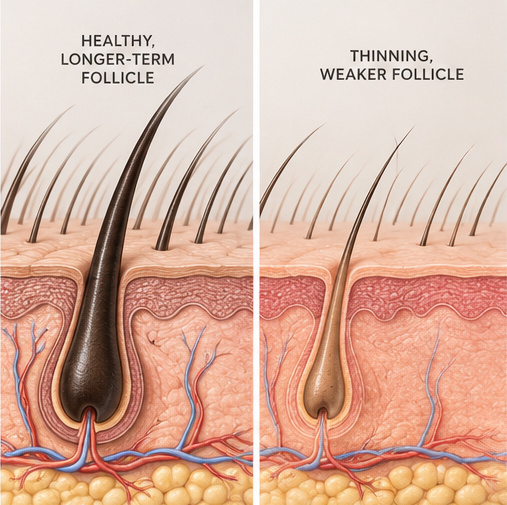
PRF works around existing follicles.
If viable but miniaturizing follicles remain in a thinning area, regenerative or medical strategies may sometimes be considered as part of a broader treatment plan.
Hair Transplant
A transplant takes follicles from somewhere else.
If an area has experienced substantial follicular loss, supporting the scalp biologically does not automatically recreate follicles that are no longer producing hair.
A transplant approaches that problem differently by relocating healthy follicles from a suitable donor zone.
So the decision is not simply:
“Which treatment grows more hair?”
The better question is:
“What type and stage of hair loss are we trying to treat?”
PRF May Be Considered Earlier in the Hair-Loss Process
Patients sometimes assume they need to wait until hair loss becomes severe before doing anything.
That is not necessarily the most useful strategy.
As discussed in our guide to the Early Signs of Hair Loss, progressive thinning may initially appear as:
- widening of the hair part
- reduced overall density
- a smaller-feeling ponytail
- greater scalp visibility
- thinning around the crown
- gradual hairline changes
- progressively finer hairs
When follicles are still present, the treatment objective may be different from treating an area with advanced follicular loss.
Depending on the diagnosis, patients may be evaluated for medical management, regenerative treatments such as PRF, lifestyle or nutritional contributors, or other appropriate strategies.
Earlier treatment also does not mean automatically choosing PRF.
It means identifying why the hair is changing while meaningful follicular activity may still be present.
Hair Transplantation May Address a Different Stage of Hair Loss
Hair transplantation is generally considered when a patient needs additional hair coverage and has an adequate donor supply.
The American Academy of Dermatology notes that appropriate hair-transplant candidates need enough healthy donor hair that can be transplanted as well as the ability to grow hair in the recipient area.
That means transplantation depends on something PRF does not:
Donor Hair
There is a finite number of follicles available for transplantation.
A hair transplant therefore requires careful planning around:
- donor density
- future progression of hair loss
- recipient area
- desired density
- hairline design
- patient age
- type of hair loss
- realistic long-term expectations
Modern transplantation can produce natural-looking results in appropriate candidates, but it is not simply a matter of placing unlimited hair wherever thinning occurs.
Can PRF Replace a Hair Transplant?
Sometimes patients searching for a nonsurgical option ask whether PRF can prevent them from ever needing a transplant.
The answer depends on the underlying condition and stage of hair loss.
PRF may have a role when viable follicles remain and the treatment objective is to support those follicles and the surrounding scalp environment.
But PRF cannot physically relocate follicles into an area.
Therefore, if a patient has substantial follicular loss and wants increased coverage in an area where adequate follicles are no longer present, a hair transplant may address a problem that PRF cannot solve in the same way.
This does not mean everyone with advanced hair loss is automatically a transplant candidate.
Donor availability, diagnosis, scalp health, medical history, expectations, and progression must all be considered.
Can a Hair Transplant Stop Future Hair Loss?
No.
This is one of the most important misconceptions about hair transplantation.
A hair transplant relocates selected follicles, but the patient’s non-transplanted native hair can continue to thin over time.
The American Academy of Dermatology specifically notes that hair loss and thinning can continue after hair-transplant surgery and that medical treatment may sometimes be recommended to help slow additional loss.
This has major implications for treatment planning.
Imagine a patient restores the frontal hairline surgically but continues losing native hair behind the transplanted area.
Without long-term planning, the appearance of the scalp may change considerably as the underlying hair-loss process continues.
That is why hair restoration should be thought of as a long-term strategy, not simply a one-time cosmetic correction.
PRF vs. Hair Transplant Recovery
Another major difference is the degree of intervention involved.
PRF Recovery
PRF is minimally invasive and does not require follicular extraction or surgical implantation.
Patients may experience temporary effects around injection sites such as tenderness, redness, swelling, sensitivity, or bruising.
Treatment is generally performed as a series rather than as one surgical event.
Hair Transplant Recovery
Hair transplantation is surgery.
The procedure involves both a donor area and a recipient area, and recovery may include temporary swelling, crusting, tenderness, redness, and postoperative care requirements.
With FUE, individual follicular units are harvested. FUT involves strip harvesting and therefore a different donor-site wound and scar pattern.
The American Academy of Dermatology notes that modern transplant procedures can take several hours and that transplanted hairs commonly shed initially before new growth develops over the following months.
The two recovery experiences are therefore very different.
PRF vs. Hair Transplant Results
The meaning of “results” is also different.
PRF Results
The objective is typically gradual improvement or support involving areas where follicles remain.
Possible changes may include:
Hair density → hair quality → hair thickness → reduced appearance of thinning
But response varies substantially between patients.
PRF research remains much smaller than the evidence base for established hair-transplant surgery. Existing PRF studies are encouraging, but reviews continue to call for larger trials and standardized protocols.
Hair Transplant Results
The goal is different:
Redistribution of viable follicles → growth in recipient area → increased visible coverage
The AAD notes that many patients begin seeing transplant results around six to nine months, while some require approximately 12 months.
The transplanted hair itself can provide long-lasting growth, although the rest of the patient’s native hair can continue to thin.
Does PRF Require Maintenance?
PRF should not be marketed as a one-time permanent solution.
Protocols can vary, but treatment generally involves an initial series followed by evaluation of whether additional sessions may be appropriate.
The need for maintenance depends on:
Diagnosis + response + progression + treatment plan
The same concept applies to hair restoration more broadly.
Androgenetic alopecia is often progressive.
Even after a successful intervention, ongoing management of the underlying hair-loss process may still be relevant.
Is a Hair Transplant Permanent?
Hair transplantation is commonly described as a long-lasting or permanent form of hair restoration because appropriately selected donor follicles can continue growing after being moved.
The American Academy of Dermatology describes modern hair transplantation as capable of producing permanent, natural-looking results in appropriate patients.
However, that statement requires an important qualification:
Transplanted follicles and native follicles are not the same issue.
The transplanted hairs may persist while surrounding native hairs continue thinning.
Therefore:
Permanent transplanted hair ≠ permanent protection from future hair loss.
Long-term planning remains important.
Can PRF and a Hair Transplant Be Used Together?
Potentially—but the scientific evidence requires careful wording.
Platelet-derived treatments have been investigated as adjuncts to hair transplantation.
A 2025 systematic review evaluating PRP alongside hair transplantation found possible improvements in graft survival, density, and earlier hair growth, but only three controlled studies met the review criteria and protocols varied substantially. The authors concluded that better standardized trials are needed.
It is important not to automatically treat PRP evidence as PRF evidence.
Although both are autologous platelet-derived preparations, PRP and PRF are not identical products or protocols.
Direct evidence specifically evaluating PRF as an adjunct to hair transplantation remains more limited.
Therefore, Nature MedSpa should avoid claims such as:
“PRF guarantees better hair-transplant survival.”
A safer and more medically accurate position is:
Regenerative platelet-derived therapies may have complementary roles in selected hair-restoration plans, but the appropriate timing, protocol, and expected benefit should be individualized.
Who May Be a Candidate for PRF Hair Restoration?
PRF may be considered in selected patients who still have functioning hair follicles in areas of thinning and whose clinical evaluation suggests that regenerative support may be appropriate.
Potential candidates may include some patients with:
- early or moderate thinning
- pattern hair loss with existing follicles
- progressive reduction in density
- follicular miniaturization
- interest in a nonsurgical regenerative option
But visual thinning alone is not enough to determine candidacy.
Someone experiencing hair shedding because of thyroid disease, nutritional deficiency, medication, inflammatory scalp disease, postpartum changes, or another underlying condition may require a very different approach.
Who May Be a Candidate for Hair Transplantation?
Hair transplantation may be considered for selected patients who:
- have a suitable diagnosis
- have adequate healthy donor hair
- have areas where additional follicular coverage is desired
- have realistic expectations
- understand the possibility of future native hair loss
- are medically appropriate surgical candidates
Not every person with significant hair loss has sufficient donor density for the result they want.
And not every patient with early thinning should immediately undergo surgery.
A 2025 review of contemporary hair transplantation emphasizes the importance of patient selection, donor management, surgical technique, and postoperative care in achieving appropriate outcomes.
What About Younger Patients?
Age alone does not determine treatment.
However, younger patients with actively progressing hair loss require especially careful long-term planning.
A hairline designed for the appearance of the scalp today must still make sense if hair loss progresses over the following years.
The AAD notes that younger men experiencing hair loss may sometimes be advised to delay transplantation while the hair-loss pattern is assessed and treated.
This again illustrates why the first step should not be choosing between PRF and surgery.
The first step is establishing what type of hair loss is occurring and how it is likely to behave.
What If My Hair Loss Is Already Advanced?
Advanced hair loss changes the conversation.
If viable follicles remain but are significantly miniaturized, nonsurgical treatment may still have a role depending on the diagnosis.
If an area has very limited remaining follicular activity, however, the potential of treatments designed to support existing follicles becomes increasingly limited.
Hair transplantation may then become part of the discussion—but only if adequate donor hair is available.
Even transplantation has biological limits.
A patient with a very large recipient area and limited donor supply may not be able to achieve the density of someone with a smaller area of hair loss.
This is why realistic expectations are essential.
PRF vs. Hair Transplant: It Is Not Always Either/Or
Hair restoration is often presented online as a competition:
PRF vs. transplant.
But clinically, that can be the wrong way to think about it.
Different treatments address different stages or aspects of hair loss.
A patient’s long-term strategy could potentially involve:
early recognition → diagnosis → preservation/support of existing hair → monitoring → additional intervention if hair loss progresses
For another patient, transplantation may already be appropriate.
For another, neither PRF nor transplantation may be the correct first treatment because an underlying medical or scalp condition needs to be addressed.
This is why individualized evaluation matters more than choosing a treatment based on before-and-after photographs.
Why Diagnosis Comes Before Treatment
Before asking:
“Should I get PRF or a hair transplant?”
Ask:
“Why am I losing hair, and how many viable follicles remain?”
Hair loss can result from many causes.
Androgenetic alopecia is only one of them.
As discussed in Early Signs of Hair Loss, hair changes may also be associated with:
- temporary shedding
- hormonal changes
- illness
- stress
- nutritional deficiencies
- medications
- thyroid conditions
- scalp disease
- traction
- postpartum changes
Different conditions require different treatment strategies.
The American Academy of Dermatology similarly emphasizes that determining the type of hair loss is important because different types require different treatments.
Frequently Asked Questions
Is PRF better than a hair transplant?
Neither treatment is universally better.
They solve different problems.
PRF is designed to work with existing follicles, while a hair transplant relocates follicles from a donor area into areas where additional coverage is needed.
The appropriate option depends on the diagnosis, stage of hair loss, donor availability, and individual goals.
Can PRF regrow hair in a completely bald area?
PRF should not be expected to create new follicles.
Its potential role depends on the presence and condition of existing follicles.
An area without sufficient viable follicles presents a different biological problem from an area containing miniaturizing follicles.
Can PRF prevent me from ever needing a hair transplant?
That cannot be guaranteed.
Some patients may maintain satisfactory hair density with nonsurgical management, while others experience progressive loss and may later consider transplantation.
Progression varies considerably between individuals.
Can a hair transplant create new follicles?
No.
A hair transplant does not manufacture new follicles.
It redistributes existing follicles from a donor area to another location.
Because donor hair is finite, donor management is an important part of surgical planning.
Does transplanted hair fall out?
Temporary shedding of transplanted hairs after surgery is expected.
According to the American Academy of Dermatology, transplanted hairs commonly shed during the first several weeks after surgery before later growth develops.
How long does a hair transplant take to grow?
The AAD reports that many patients see results between approximately six and nine months, while some require around 12 months.
Individual timelines vary.
Will I continue losing hair after a transplant?
Potentially, yes.
Native, non-transplanted hair may continue to thin even after successful transplantation.
That is why long-term management of progressive hair loss may still be important.
Is PRF permanent?
PRF should not be considered a guaranteed permanent treatment.
Hair loss may continue to progress, and some patients may undergo a series of treatments or maintenance depending on their response and clinical plan.
Is PRF the same as PRP?
No.
Both are autologous platelet-derived preparations, but their processing and biological composition differ.
PRF incorporates a fibrin matrix and is prepared using protocols that differ from conventional PRP.
A separate article comparing PRF vs. PRP for Hair Restoration can explore those differences in greater detail.
Can PRF be performed after a hair transplant?
Platelet-derived regenerative procedures have been investigated around hair-transplant surgery, particularly PRP.
However, protocols vary, and direct evidence specifically for PRF in this setting remains more limited.
Timing and suitability should therefore be determined individually.
How do I know which treatment I need?
Start with a professional hair-loss evaluation rather than choosing a procedure first.
The evaluation should consider:
cause → pattern → progression → existing follicles → donor availability → medical history → goals
From there, an appropriate treatment strategy can be discussed.
Conclusion
PRF Hair Restoration and hair transplantation are not competing versions of the same treatment.
They address hair loss in fundamentally different ways.
PRF supports the biological environment surrounding existing follicles.
Hair transplantation moves healthy follicular units from a donor region into areas where additional follicles are needed.
PRF therefore may be more relevant when viable follicles remain and regenerative support is clinically appropriate.
Hair transplantation may become relevant when greater follicular coverage is needed and sufficient donor hair is available.
Neither approach is automatically appropriate simply because someone notices thinning.
The most important first step remains determining:
- What is causing the hair loss?
- How advanced is it?
- Are viable follicles still present?
- Is there adequate donor hair?
- What is the realistic long-term goal?
Once those questions are answered, hair restoration becomes much less about choosing the most aggressive treatment and much more about selecting the right strategy for the stage and cause of hair loss.
Not Sure Whether PRF or Another Hair-Restoration Option Makes Sense?
Hair thinning can look similar even when the underlying causes are very different.
At Nature MedSpa, the first step is an individualized evaluation of your hair-loss pattern, scalp condition, medical history, existing hair density, and treatment goals.
From there, we can discuss whether PRF Hair Restoration, another approach, or referral for surgical evaluation may be appropriate.
- Explore PRF Hair Restoration
- Read: Hair Restoration with PRF
- Read: Early Signs of Hair Loss
- Meet Yunet Fuentes, MSN, FNP-BC
Medical References
- Shrestha S, et al. — Platelet-Rich Fibrin: A Review of Its Role as a New Treatment in Androgenetic Alopecia
A 2024 review examining PRF preparation techniques and available clinical evidence for androgenetic alopecia. The authors reported encouraging early clinical findings while highlighting limitations in the available evidence and treatment standardization. - Mohale SA, et al. — Effectiveness of Injectable Platelet-Rich Fibrin Therapy in Alopecia and Facial Rejuvenation: A Systematic Review
Systematic review evaluating available injectable PRF studies. The review found promising findings for alopecia but emphasized the need for larger controlled trials, longer follow-up, and standardized protocols. - Hair Transplantation: State of the Art
Contemporary review of modern hair-transplantation techniques, including FUE and strip excision, donor dominance, patient selection, technical considerations, and postoperative management. - American Academy of Dermatology — Hair Transplantation
Patient resource explaining candidate selection, donor-hair requirements, modern transplantation, expected growth timeline, and the potential for continued native hair loss after transplantation. - Sindhusen S, et al. — Efficacy of Platelet-Rich Plasma as an Adjunct to Hair Transplantation: A Systematic Review
2025 systematic review examining PRP used alongside hair transplantation. Findings suggest potential benefits, but evidence remains limited by small numbers of controlled studies and heterogeneous protocols. This evidence should not be directly extrapolated to PRF.
Content Disclaimer
This article is intended for general educational purposes and does not constitute individualized medical advice. Hair loss may have many causes, and PRF Hair Restoration or hair transplantation may not be appropriate for every patient. Treatment suitability, risks, expected benefits, recovery, maintenance, and results vary by individual and should be discussed during an appropriate professional medical evaluation.