

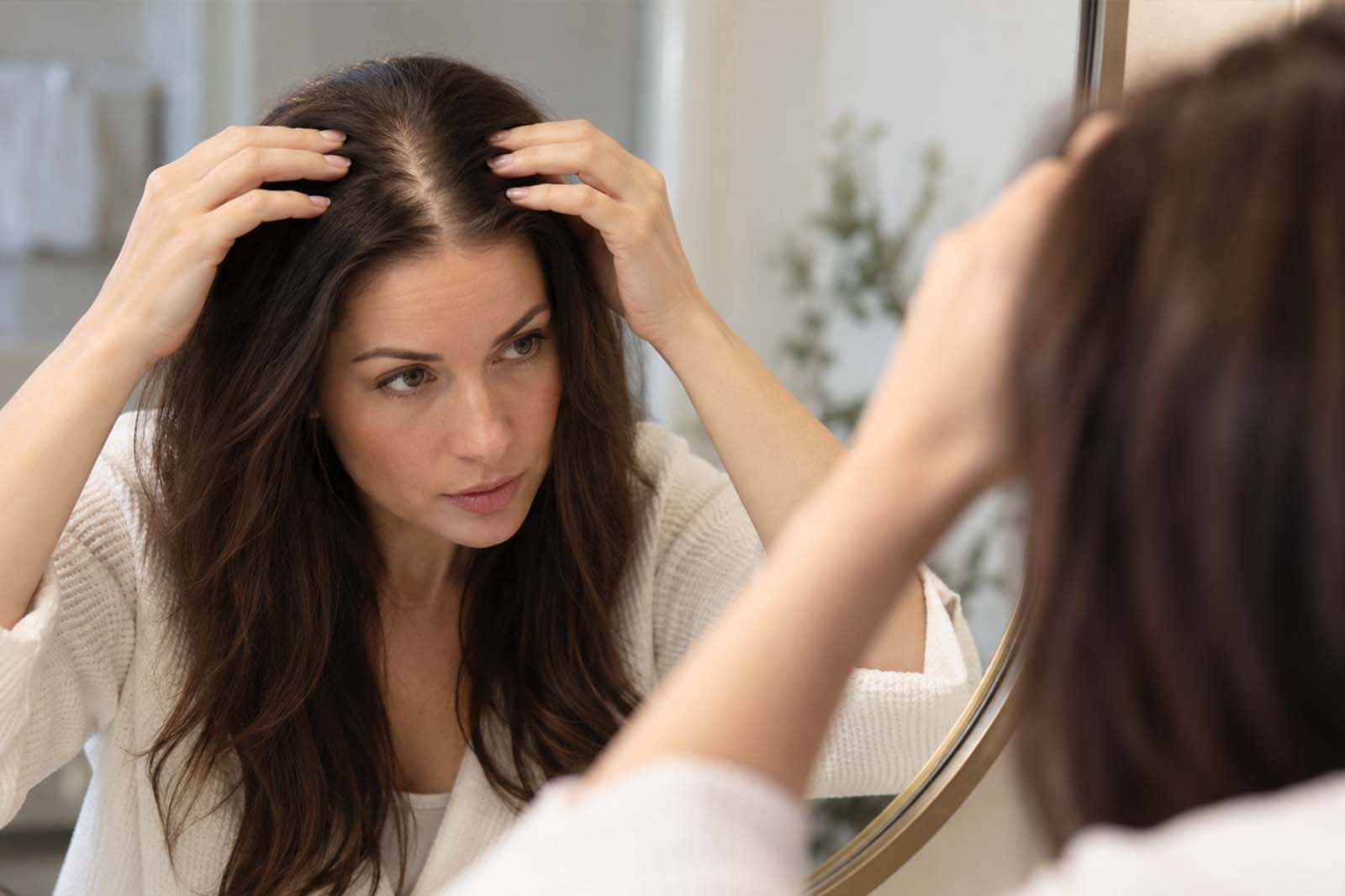
Hair loss in women does not always look like a bald spot.
For many women, the first changes are much more subtle:
- A center part gradually becomes wider.
- A ponytail feels smaller.
- More scalp becomes visible under overhead lighting.
- Hair around the temples appears thinner.
- Or suddenly, much more hair than usual begins collecting in the shower or hairbrush.
These changes can be concerning—but they do not all mean the same thing.
Hair loss in women can result from genetic pattern hair loss, temporary shedding, hormonal changes, childbirth, stress, medical conditions, nutritional factors, medications, scalp disorders, or repeated tension on the hair.
That is why identifying the cause is more important than immediately choosing a treatment.
Hair thinning is a symptom. Understanding why it is happening determines what should happen next.
Written & Medically Reviewed by Yunet Fuentes, MSN, FNP-BC
Board-Certified Family Nurse Practitioner
Clinical Director, Nature MedSpa
Table of Contents
- How Common Is Hair Loss in Women?
- What Does Female Hair Loss Look Like?
- Female Pattern Hair Loss
- Hair Shedding vs. Progressive Hair Thinning
- Hormonal Changes and Hair Loss
- Postpartum Hair Loss
- Hair Loss During Menopause
- Stress, Illness, and Telogen Effluvium
- Nutritional and Medical Causes
- Thyroid Conditions and Hair Changes
- Traction Alopecia and Hairstyling
- Scalp Conditions and Other Types of Alopecia
- When Should Women Seek Evaluation?
- How Female Hair Loss Is Evaluated
- Treatment Options for Hair Loss in Women
- Where PRF Hair Restoration May Fit
- PRF vs. Hair Transplant for Women
- Can Female Hair Loss Be Prevented?
- Frequently Asked Questions
How Common Is Hair Loss in Women?
Hair loss is not only a men’s health concern.
Female pattern hair loss (FPHL) is considered the most common cause of hair loss in women and can begin at different stages of adulthood.
For many women, it first becomes noticeable during their 40s, 50s, or 60s, although it can appear earlier.
The clinical pattern is often different from the classic pattern seen in men.
Instead of developing a completely bald area, women more commonly experience progressive reduction in density across the top or central scalp.
The change can be so gradual that it may develop for months—or even years—before it becomes obvious.
What Does Hair Loss in Women Look Like?
The American Academy of Dermatology identifies several common early signs in women, particularly:
- a widening hair part
- reduced ponytail fullness
- gradual overall thinning
- more visible scalp
- changes near the temples
These changes can develop slowly and may initially be easier to recognize by comparing photographs taken several months or years apart.
Other women experience a completely different pattern:
Excessive shedding
Instead of gradual thinning, large amounts of hair may suddenly begin appearing in the shower, brush, pillow, or clothing.
That distinction is important because:
Hair shedding and progressive hair loss are not necessarily the same process.
Our detailed guide to the Early Signs of Hair Loss explains how to recognize these changes in greater detail.
Female Pattern Hair Loss
Female pattern hair loss is also referred to as female androgenetic alopecia.
It is characterized by progressive changes in susceptible follicles.
Over time, some follicles undergo miniaturization, meaning they produce progressively finer, shorter hairs.
As this process continues, overall density may decrease.
A recent review describes female androgenetic alopecia as involving interactions between genetic, hormonal, and environmental factors, with progressive follicular miniaturization as a central feature.
What Does Female Pattern Hair Loss Look Like?
A common presentation is:
Normal-looking frontal hairline + widening central part + progressive thinning across the crown
Other patterns can occur.
Some women experience more diffuse thinning across the top of the scalp, while others develop greater frontotemporal recession.
Importantly, most women with female pattern hair loss do not simply lose all of their hair.
Instead, density often gradually decreases.
Is Female Pattern Hair Loss Always Caused by High Hormones?
No.
This is an important misconception.
Although androgens can participate in the biology of pattern hair loss, many women with female pattern hair loss do not have abnormally elevated androgen levels.
Hormonal evaluation may become more relevant when hair loss occurs alongside other clinical signs, such as significant new facial hair growth, certain menstrual abnormalities, or other symptoms suggesting an endocrine disorder.
Therefore:
Female pattern hair loss ≠ automatically having a hormonal disorder.
A clinical evaluation is necessary to determine whether additional testing makes sense for a particular patient.
Hair Shedding vs. Progressive Hair Thinning
Women frequently describe both processes simply as:
“My hair is falling out.”
But medically, they may represent very different situations.
Excessive Hair Shedding
It is normal to shed approximately 50 to 100 hairs each day.
When significantly more hairs enter the shedding phase, the condition may be classified as excessive shedding or telogen effluvium.
Possible triggers can include:
- childbirth
- significant illness
- fever
- surgery
- substantial weight loss
- major physical stress
- psychological stress
- some medication changes
Shedding often begins months after the triggering event, which can make the connection difficult for patients to recognize.
Progressive Hair Thinning
Female pattern hair loss behaves differently.
Instead of a temporary wave of shedding, the follicles progressively produce smaller hairs.
A woman may notice:
Wider part → finer hair → reduced density → greater scalp visibility
Some women can experience excessive shedding and progressive pattern hair loss at the same time.
That is another reason diagnosis cannot reliably be made from a single symptom.
Hormonal Changes and Hair Loss in Women
Hair follicles respond to a complex biological environment that includes genetics, hormones, nutrition, age, health, and the hair-growth cycle.
Hormonal changes can therefore influence hair behavior at different stages of a woman’s life.
Periods when hair changes may become particularly noticeable include:
- after pregnancy
- after stopping certain hormonal medications
- perimenopause
- menopause
- certain endocrine disorders
However, seeing hair thinning during one of these life stages does not prove that hormones are the sole cause.
Other causes can occur simultaneously.
Postpartum Hair Loss
One of the most common concerns among new mothers is sudden hair shedding several months after childbirth.
During pregnancy, hormonal changes can alter the normal hair cycle.
After delivery, changing estrogen levels can result in a larger number of hairs entering the shedding phase.
The result can appear dramatic.
Hair may accumulate in:
- the shower
- brushes
- bedding
- clothing
The American Academy of Dermatology explains that postpartum excessive shedding is generally a form of telogen effluvium, rather than permanent progressive hair loss. It commonly peaks around four months postpartum, and many women recover normal fullness by their child’s first birthday.
But persistent postpartum thinning deserves evaluation.
If density does not return as expected—or if thinning continues well beyond the typical postpartum period—another form of hair loss may also be present.
Postpartum shedding can sometimes make previously subtle female pattern hair loss more noticeable.
Hair Loss During Menopause
Hair changes are also common around menopause.
Some women notice:
- widening of the hair part
- overall reduced density
- more visible scalp
- gradual recession around portions of the hairline
The AAD notes that many women notice scalp thinning during menopause and recommends professional evaluation because multiple conditions can cause similar changes.
Menopause does not automatically mean that hair loss is inevitable or that every woman requires the same treatment.
The clinical pattern still needs to be evaluated.
Stress, Illness, and Telogen Effluvium
A major illness or stressful event can sometimes affect hair months later.
This can include:
- high fever
- significant illness
- hospitalization
- surgery
- major weight loss
- emotional stress
- childbirth
This delayed shedding often surprises patients.
Someone may recover from an illness and only begin noticing increased shedding several months afterward.
That delay occurs because the hair-growth cycle takes time to transition.
The AAD notes that excessive shedding related to a temporary stressor often improves as the body readjusts, with density frequently recovering over subsequent months.
However, persistent or progressive changes should be evaluated rather than automatically attributed to stress.
Nutritional and Medical Causes of Hair Loss in Women
Hair follicles are biologically active structures.
Changes in general health can therefore affect the normal hair cycle.
Diffuse hair loss can sometimes occur in association with:
- nutritional deficiencies
- endocrine disorders
- autoimmune disease
- systemic illness
- medication effects
A 2024 clinical review of hair loss emphasizes the importance of a comprehensive history and physical examination, with targeted testing when appropriate to identify possible nutritional, autoimmune, or endocrine contributors.
This is why blindly taking supplements is not the best first response to hair loss.
More vitamins do not automatically mean more hair.
The AAD specifically cautions that excessive intake of certain nutrients can itself worsen hair loss.
Testing and treatment should be based on actual clinical findings rather than assuming that every woman with thinning hair has a vitamin deficiency.
Thyroid Conditions and Hair Changes
Thyroid function is one factor healthcare professionals may consider when evaluating unexplained diffuse hair loss.
Both thyroid dysfunction and telogen effluvium have been associated in clinical literature, although the relationship depends on the individual patient and should not be assumed from hair loss alone.
If hair thinning occurs along with other unexplained symptoms or the pattern suggests an underlying medical contributor, targeted laboratory evaluation may be considered.
Again, the sequence matters:
Evaluation → suspected cause → appropriate testing
rather than:
Hair loss → automatically ordering every possible laboratory test
Traction Alopecia and Hairstyling
Not all female hair loss begins inside the body.
Repeated mechanical tension can damage hair follicles.
Styles that repeatedly pull tightly on the hair can contribute to traction alopecia, particularly around areas experiencing the greatest tension.
Examples may include repeatedly wearing very tight:
- braids
- ponytails
- buns
- extensions
- other tension-producing styles
If the tension continues long enough and follicles become permanently damaged, hair regrowth may become limited.
The AAD recognizes tight hairstyles as a preventable cause of hair loss and emphasizes reducing repeated tension.
Early recognition therefore matters.
Scalp Conditions and Other Types of Alopecia
A widening part or thinner ponytail may suggest female pattern hair loss, but not every type of hair loss follows that pattern.
Women can also experience conditions such as:
Alopecia areata
An autoimmune condition that can produce localized patches or more diffuse forms of hair loss.
Frontal fibrosing alopecia
A form of scarring alopecia that can cause progressive recession of the frontal hairline and may also involve eyebrows.
Central centrifugal cicatricial alopecia
A form of scarring hair loss that often begins around the central scalp.
Traction alopecia
Hair loss related to repeated mechanical tension.
Telogen effluvium
Diffuse excessive shedding commonly associated with physiological or psychological stressors.
Some scarring forms of alopecia can permanently damage follicles.
This makes evaluation especially important when hair loss occurs with:
- scalp burning
- significant itching
- tenderness
- redness
- scaling
- smooth scar-like areas
- eyebrow loss
- rapidly expanding patches
These are situations where specialized dermatologic assessment may be particularly important.
Hair Loss in Black Women
Hair loss should not be assumed to have the same cause in every patient population.
Black women may experience common conditions such as female pattern hair loss and telogen effluvium, while conditions including traction alopecia and central centrifugal cicatricial alopecia can also be important considerations.
The AAD specifically emphasizes that women should not automatically be blamed for causing their own hair loss through styling practices and that accurate diagnosis and early intervention are important.
Cultural hair practices should be discussed respectfully and in the context of the individual’s actual clinical presentation.
When Should Women Seek a Hair Loss Evaluation?
Consider professional evaluation when you notice:
- a progressively widening part
- a noticeably smaller ponytail
- persistent excessive shedding
- increasing scalp visibility
- thinning around the crown
- hairline recession
- localized bald patches
- changes in eyebrow density
- scalp pain, redness, scaling, or inflammation
- continued thinning after postpartum recovery
- sudden or rapid hair loss
- hair changes associated with other unexplained symptoms
The earlier the underlying cause is identified, the more options may be available for conditions in which follicles remain viable.
The AAD similarly notes that early treatment tends to provide better opportunities for managing many forms of hair loss.
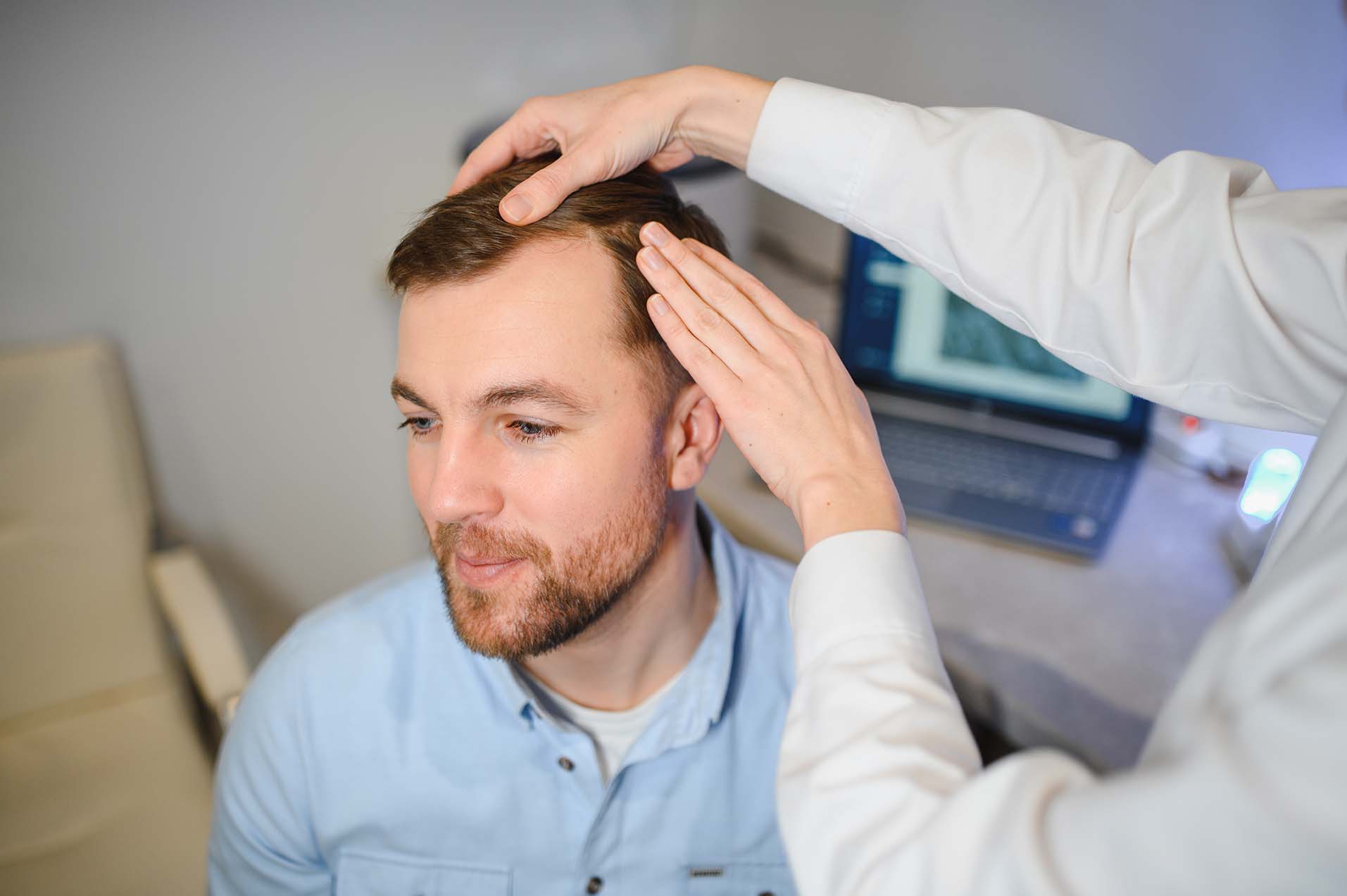
How Is Hair Loss in Women Evaluated?
A useful hair-loss evaluation involves much more than simply looking at the scalp.
Depending on the clinical situation, the evaluation may consider:
Pattern
Where is thinning occurring?
Timeline
Did it begin gradually or suddenly?
Shedding
Has the amount of hair being shed changed?
Hair caliber
Are some hairs becoming progressively finer?
Medical history
Have there been recent illnesses, surgeries, pregnancy, medication changes, or other health events?
Menstrual and hormonal history
Are there symptoms that suggest additional endocrine evaluation may be useful?
Nutrition and weight changes
Has there been substantial dieting or weight loss?
Family history
Do close relatives have progressive pattern hair loss?
Hairstyling
Is there repeated traction on specific parts of the scalp?
Scalp health
Are inflammation, scaling, tenderness, or other abnormalities present?
In selected cases, further examination, targeted laboratory testing, trichoscopy, or referral for specialized dermatologic evaluation may be appropriate. Contemporary reviews emphasize history, physical examination, hair-density evaluation, and targeted testing rather than relying on a single visual feature.
Treatment Options for Hair Loss in Women
There is no universal female hair-loss treatment.
Treatment depends on the diagnosis.
The strategy may involve:
Treat the underlying cause → preserve existing follicles → support appropriate regrowth → manage progression
Possible approaches vary considerably.
Medical Treatment
For female pattern hair loss, topical minoxidil remains the established FDA-approved pharmacologic treatment and is widely used as first-line therapy.
Other prescription approaches may sometimes be used off-label after appropriate medical evaluation.
Medication selection depends on factors such as:
- diagnosis
- medical history
- age
- pregnancy potential
- medications
- contraindications
- patient goals
Women who are pregnant, planning pregnancy, or breastfeeding require particular consideration because some hair-loss medications are inappropriate during these periods.
Treatment should therefore be individualized by an appropriate healthcare professional.
Addressing an Underlying Trigger
If hair loss is secondary to another issue, the priority may be addressing that issue.
Examples may include:
- recovery following major illness
- correction of a documented nutritional deficiency
- management of thyroid disease
- changing damaging hairstyling practices
- evaluation of a potentially contributing medication
- treatment of scalp inflammation or disease
A medication should not be stopped simply because hair loss is suspected as a side effect without first discussing the concern with the prescribing healthcare professional.
Where PRF Hair Restoration May Fit
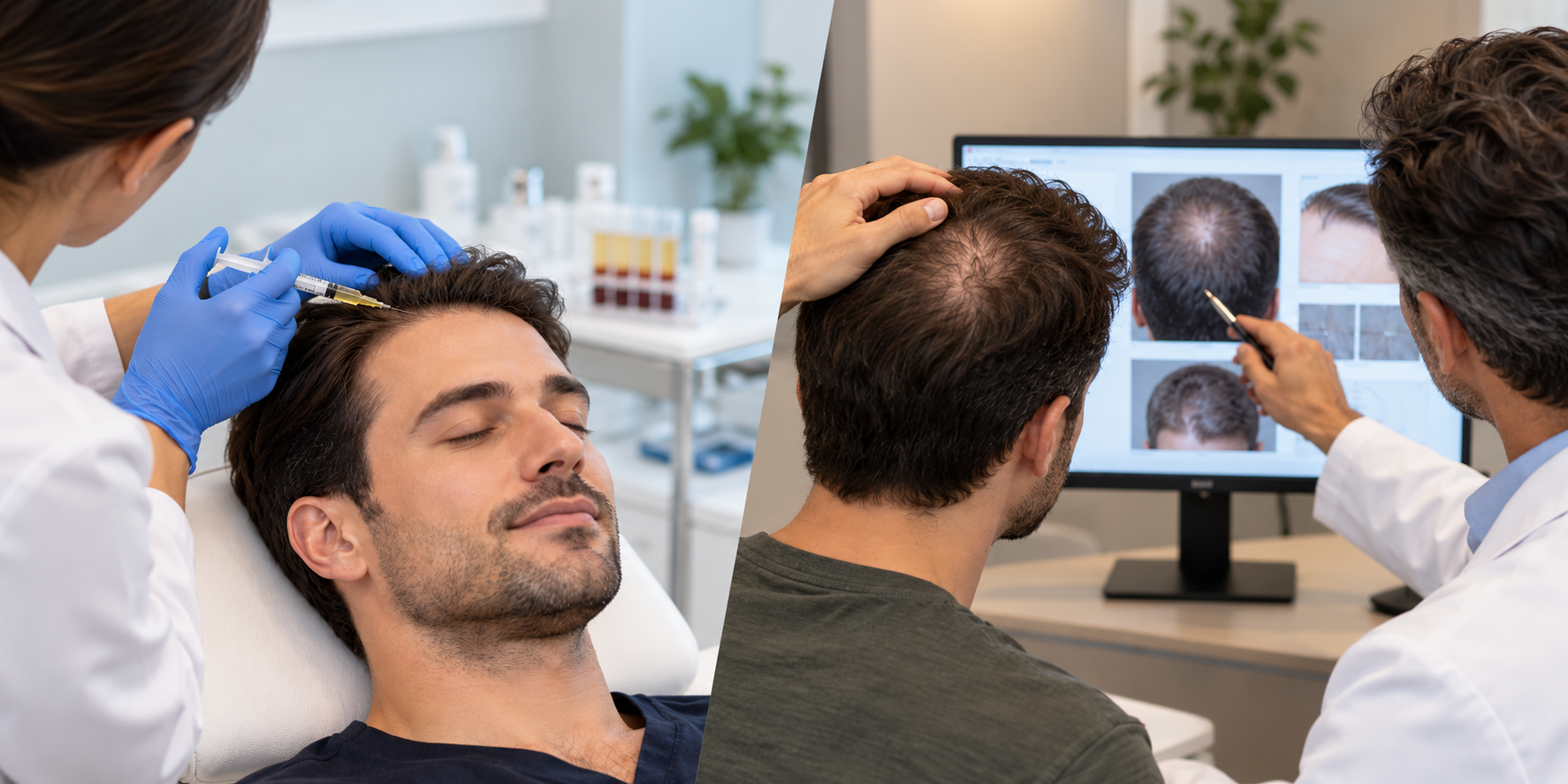
For selected women, Platelet-Rich Fibrin (PRF) may be considered as part of a regenerative hair-restoration strategy.
PRF is prepared from the patient’s own blood.
It contains platelets and biological components within a fibrin matrix and is introduced into selected areas of the scalp.
The important concept is:
PRF works with existing follicles. It does not create new hair follicles.
A 2024 published case series specifically investigated injectable PRF in 11 patients with female pattern hair loss and reported improvements in measured hair parameters after treatment. However, the study was small and does not establish PRF as a universal or definitive treatment for female hair loss.
A broader 2024 review of PRF in androgenetic alopecia similarly described encouraging early evidence while emphasizing the need for larger studies and standardized protocols.
Therefore, PRF should be positioned as:
A possible regenerative option for appropriately selected patients
—not as:
The treatment for every woman experiencing hair loss.
Learn more in:
When PRF May Not Be the First Step
This distinction is especially important in women.
Imagine four patients who all say:
“My hair is thinning.”
Patient A
Has progressive female pattern hair loss with miniaturizing follicles.
Patient B
Is experiencing temporary postpartum shedding.
Patient C
Has an untreated thyroid disorder.
Patient D
Has inflammatory scarring alopecia.
The same procedure should not automatically be recommended to all four patients.
PRF does not replace appropriate diagnosis or management of an underlying medical or dermatologic condition.
PRF vs. Hair Transplant for Women
PRF and hair transplantation address different problems.
PRF
Works with existing follicles and attempts to support their biological environment.
Hair Transplant
Moves viable follicles from an appropriate donor area into areas where additional coverage is desired.
Neither procedure creates an unlimited supply of new follicles.
And neither is automatically appropriate simply because thinning is visible.
Women with more advanced pattern hair loss may occasionally be candidates for hair transplantation, but donor availability, the distribution of thinning, future progression, and diagnosis all influence candidacy.
For a detailed comparison, see:
PRF vs. Hair Transplant: What’s the Difference and Which May Be Right for You?
What About PRP?
Patients frequently confuse PRF with PRP — Platelet-Rich Plasma.
They are both autologous platelet-derived preparations but differ in processing and composition.
Research into PRP for female hair loss is larger than the current PRF literature.
A 2024 systematic review and meta-analysis examining PRP in female hair loss reported potential improvements but also highlighted variation between studies and the need for stronger standardized evidence.
PRP evidence should therefore not automatically be presented as PRF evidence.
A future article in this cluster will examine:
PRF vs. PRP for Hair Restoration
in greater detail.
Can Female Hair Loss Be Prevented?
Not all forms of hair loss can be prevented.
Genetic pattern hair loss, for example, cannot simply be prevented through shampoo, vitamins, or hair-care routines.
However, certain preventable contributors can sometimes be reduced.
Helpful strategies may include:
- avoiding chronically tight hairstyles
- limiting unnecessary damage from harsh hair practices
- maintaining appropriate nutrition
- addressing medical problems when present
- seeking evaluation for persistent changes
- avoiding unproven supplements or treatments that could cause harm
Perhaps most importantly:
Do not wait for a large bald area before paying attention.
Gradual changes in density may be easier to manage before substantial follicular miniaturization or irreversible damage has occurred.
Hair Loss in Women Is Not One Diagnosis
This is the central message of the article.
Hair loss in women is an umbrella concern.
Under that umbrella are many possible conditions:
- Female pattern hair loss
- Telogen effluvium
- Postpartum shedding
- Traction alopecia
- Alopecia areata
- Scarring alopecias
- Medical or nutritional contributors
- Medication-related changes
- and others.
Two women can have nearly identical-looking thinning and require completely different approaches.
That is why treatment should follow this sequence:
Concern → Evaluation → Cause → Appropriate Treatment → Monitoring
Not:
Hair thinning → Choose a procedure
Frequently Asked Questions
What is the most common cause of hair loss in women?
Female pattern hair loss is considered the most common cause of hair loss in women.
It typically causes progressive reduction in density, often beginning with widening of the central part.
How can I tell if my hair is thinning?
Common signs include:
- widening of the hair part
- decreased ponytail fullness
- increased scalp visibility
- progressive thinning at the crown
- finer hair strands
- persistent changes in overall density
Comparing photographs taken under similar lighting over several months can sometimes help reveal gradual changes.
Why am I suddenly losing so much hair?
Sudden excessive shedding may occur after events such as childbirth, illness, high fever, surgery, major stress, or significant weight loss.
Telogen effluvium often becomes noticeable several months after the triggering event.
Sudden or severe hair loss should still be professionally evaluated.
Can stress cause hair loss in women?
Significant physical or psychological stress can trigger excessive shedding in some people.
This may occur through telogen effluvium, in which more hairs than usual enter the shedding phase.
Stress should not automatically be assumed to be the cause of persistent hair loss, however.
Is postpartum hair loss permanent?
Postpartum shedding is usually temporary.
According to the AAD, shedding often peaks around four months after childbirth and most women regain their normal fullness by their child’s first birthday.
Persistent thinning beyond the expected recovery period should be evaluated.
Can menopause cause thinning hair?
Hair thinning commonly becomes noticeable around menopause.
A widening part or reduced density may develop during this life stage, but multiple conditions can cause similar changes and should be distinguished through evaluation.
Can thyroid problems cause hair loss?
Thyroid dysfunction can be associated with hair shedding in some patients.
However, hair loss alone does not establish thyroid disease.
Testing should be based on medical history, symptoms, examination, and clinical judgment.
Should I take vitamins for hair loss?
Not automatically.
Nutritional deficiencies can contribute to hair loss in some patients, but supplements are most appropriate when there is a reason to use them.
Excessive intake of certain nutrients can also contribute to hair loss.
Does PRF work for female hair loss?
Early clinical research suggests PRF may have potential for selected patients with female pattern hair loss, but the evidence remains limited.
A small 2024 case series involving 11 patients reported improvements after injectable PRF, while broader reviews emphasize the need for larger controlled studies and standardized protocols.
PRF is therefore best considered as one possible option within an individualized treatment plan.
Does PRF create new hair follicles?
No.
PRF should not be described as creating new follicles.
Its proposed role is to support the biological environment surrounding existing follicles.
Can women get hair transplants?
Selected women may be candidates for hair transplantation.
Candidacy depends on the diagnosis, pattern of thinning, donor-hair availability, progression, medical history, and realistic expectations.
Hair transplantation is not appropriate for every type of female hair loss.
When should a woman see someone about hair loss?
Consider evaluation when hair loss is:
- persistent
- progressive
- sudden
- producing visible scalp changes
- forming patches
- accompanied by scalp symptoms
- continuing beyond expected postpartum recovery
- associated with unexplained medical symptoms
Early evaluation can help determine the cause before choosing treatment.
Conclusion
Hair loss in women is common—but it is not one single condition.
A widening part may represent female pattern hair loss.
Sudden diffuse shedding may follow childbirth, illness, surgery, stress, or another physiological event.
Other women may have a medical, nutritional, hormonal, inflammatory, autoimmune, or traction-related contributor.
Because the appearance can overlap, the most useful question is not:
“What hair-loss treatment should I get?”
It is:
“Why is my hair changing?”
Once the cause, pattern, progression, and condition of the existing follicles are better understood, treatment decisions become much more meaningful.
For selected patients, that strategy may eventually include medical treatment, correction of an underlying cause, changes in hair-care practices, regenerative treatments such as PRF, surgical evaluation, or a combination of approaches.
The treatment should follow the diagnosis—not replace it.
Noticing Changes in Your Hair Density?
If your part is becoming wider, your ponytail feels thinner, or you are experiencing persistent shedding, a professional evaluation can help determine what may be contributing to the change.
At Nature MedSpa, hair-restoration planning begins with an individualized assessment of your hair-loss pattern, scalp health, medical history, existing hair density, and treatment goals.
When appropriate, options such as PRF Hair Restoration can then be discussed as part of a personalized plan.
- Explore PRF Hair Restoration
- Read: Hair Restoration with PRF
- Read: Early Signs of Hair Loss
- Read: PRF vs. Hair Transplant
- Meet Yunet Fuentes, MSN, FNP-BC
Medical References
- American Academy of Dermatology — Female Pattern Hair Loss
Clinical patient resource covering the presentation of female pattern hair loss, including widening of the part, progressive thinning, treatment considerations, and the importance of diagnosis. - American Academy of Dermatology — Hair Loss: Signs and Symptoms
Overview of common early signs of hair loss in women, including widening part and reduced ponytail fullness. - American Academy of Dermatology — Hair Loss or Hair Shedding?
Clinical guidance distinguishing excessive shedding, including telogen effluvium, from progressive hair loss. - American Academy of Dermatology — Hair Loss in New Moms
Guidance regarding postpartum telogen effluvium, its typical timeline, and expected recovery. - Dakkak M, Forde KM, Lanney H. Hair Loss: Diagnosis and Treatment. American Family Physician. 2024.
Review describing diffuse, patterned, and focal alopecias and emphasizing comprehensive history, examination, and targeted laboratory evaluation when systemic contributors are suspected. - Androgenetic Alopecia in Women: A Narrative Review of Pathophysiology, Clinical Evaluation, and Treatments.
Recent review examining female androgenetic alopecia, follicular miniaturization, differential diagnosis, diagnostic approaches, and available therapies. - Sharma S, et al. Injectable Platelet-Rich Fibrin for Treatment of Female Pattern Hair Loss. 2024.
Small case series involving 11 patients that reported improvement in several measured hair parameters following injectable PRF. Larger controlled studies remain necessary. - Shrestha S, et al. Platelet-Rich Fibrin: A Review of Its Role as a New Treatment in Androgenetic Alopecia. 2024.
Review examining available PRF research in androgenetic alopecia and highlighting promising preliminary findings alongside limitations in study size and protocol standardization.
Content Disclaimer
This article is intended for general educational purposes and does not constitute individualized medical advice. Hair loss in women may have many different causes, including genetic, hormonal, medical, nutritional, inflammatory, medication-related, postpartum, and mechanical factors. Treatment suitability, risks, expected benefits, recovery, maintenance, and results vary by patient and should be discussed during an appropriate professional medical evaluation.