Collagen is one of the most frequently mentioned words in aesthetic medicine.
We hear about collagen creams, collagen supplements, collagen facials, and treatments that promise to “boost collagen.”
But what does collagen stimulation actually mean?
Collagen is a structural protein that helps give skin its firmness, strength, and support. As skin ages—and as it is repeatedly exposed to factors such as ultraviolet radiation—its structure and appearance gradually change.
Modern aesthetic medicine can approach these changes in two very different ways.
Some treatments provide an immediate cosmetic or structural effect.
Others are designed to create a controlled stimulus that encourages the skin to enter a natural repair and remodeling process.
This second approach is what we mean when discussing natural collagen stimulation.
At Nature MedSpa, treatments such as Microneedling, Radiofrequency Microneedling, PRF, PIXIE™, and CO₂ Laser may be incorporated into personalized rejuvenation plans based on the patient’s skin condition, goals, and appropriate medical evaluation.
Understanding how these treatments differ is the first step toward choosing the right approach.
Table of Contents
- What Is Collagen?
- Why Does Collagen Change With Age?
- What Does Natural Collagen Stimulation Mean?
- How Does the Skin Produce New Collagen?
- What Can Collagen Remodeling Improve?
- Microneedling for Collagen Stimulation
- Radiofrequency Microneedling
- PRF and Regenerative Support
- Microneedling + PRF
- CO₂ Laser Skin Resurfacing
- PIXIE™ Multi-Layer Skin Rejuvenation
- Which Collagen-Stimulating Treatment Is Right for You?
- How Long Does Collagen Remodeling Take?
- Why Professional Evaluation Matters
- Frequently Asked Questions
What Is Collagen?
Collagen is one of the major structural proteins found throughout the body.
Within the skin, collagen fibers help provide the supportive framework responsible for characteristics such as:
- Strength
- Structure
- Firmness
- Elastic support
- Overall skin quality
Collagen works alongside other components of the extracellular matrix to maintain the skin’s architecture.
It is important, however, not to think of collagen as a static material.
Skin is living tissue.
Old components are continuously broken down while new components are produced and reorganized.
This ongoing process is known as remodeling.
Why Does Collagen Change With Age?
Skin aging is complex.
It is influenced by both internal biological processes and external factors.
These may include:
- Chronological aging
- Ultraviolet exposure
- Repeated sun damage
- Smoking
- Environmental exposure
- Hormonal changes
- Genetics
- Lifestyle factors
Over time, changes in collagen production and organization contribute to visible characteristics associated with aging.
Patients may begin noticing:
- Fine lines
- Wrinkles
- Reduced firmness
- Crepey texture
- Enlarged-looking pores
- Uneven texture
- Reduced elasticity
- Changes in overall skin quality
This is why many modern aesthetic treatments focus not only on the surface of the skin, but also on stimulating controlled tissue remodeling.
What Does Natural Collagen Stimulation Mean?
The word natural requires some clarification.
A collagen-stimulating treatment does not simply “put collagen into your face.”
Instead, treatments such as Microneedling, laser resurfacing, or radiofrequency create a controlled stimulus within the tissue.
That stimulus initiates biological processes associated with healing and remodeling.
The goal is to encourage the skin to reorganize and produce structural components as part of its own repair response.
In other words:
The treatment creates the stimulus.
Your body performs the remodeling.
That distinction is fundamental to regenerative aesthetics.
How Does the Skin Produce New Collagen?
When controlled tissue injury or thermal stimulation occurs, the body activates a repair response.
Cells involved in tissue remodeling—including fibroblasts—participate in rebuilding the extracellular matrix.
This process may involve:
- A controlled treatment stimulus
- An inflammatory and healing response
- Cellular signaling
- Fibroblast activity
- Collagen production and organization
- Progressive tissue remodeling
Importantly, this process does not happen overnight.
Collagen remodeling develops gradually.
This explains why many collagen-stimulating treatments produce results that continue evolving for weeks or months rather than creating their full effect immediately.
What Can Collagen Remodeling Improve?
Depending on the treatment and individual patient, collagen-focused procedures may be considered for concerns such as:
- Fine lines
- Wrinkles
- Skin texture
- Selected acne scars
- Enlarged-looking pores
- Reduced firmness
- Mild skin laxity
- Photoaging
- Overall skin quality
But collagen stimulation is not a universal solution.
Pigmentation, significant volume loss, vascular concerns, active acne, deep structural changes, and other conditions may require completely different treatment strategies.
This is why diagnosis and treatment selection matter.
Microneedling for Collagen Stimulation
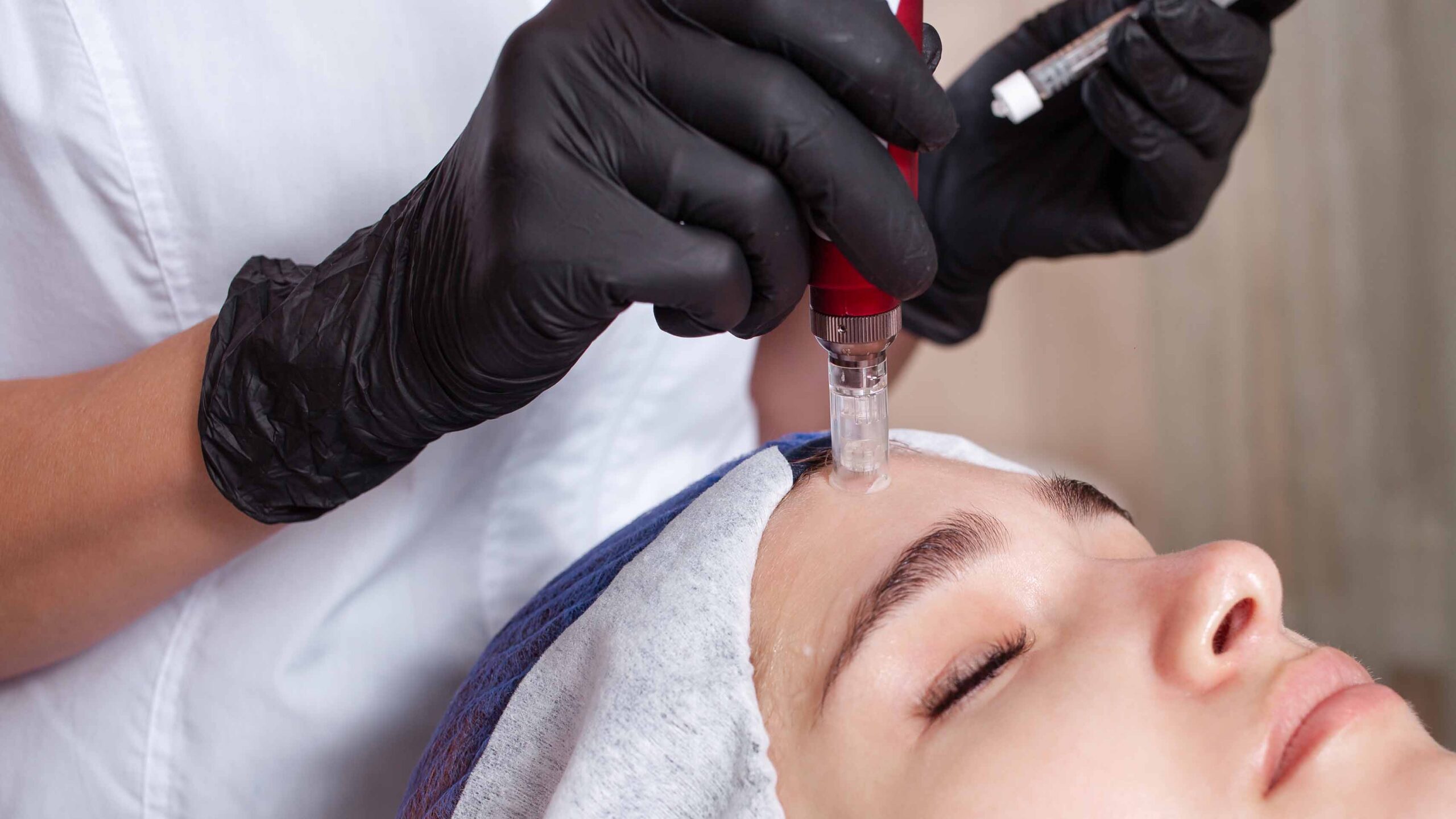
Microneedling uses very small needles to create controlled microchannels in the skin.
These controlled micro-injuries initiate a repair response associated with tissue remodeling.
FDA-authorized microneedling devices have indications that include improving the appearance of facial acne scars and facial wrinkles in adults, depending on the specific device.
Microneedling may be considered when addressing:
- Fine lines
- Selected acne scars
- Skin texture
- Overall skin quality
Treatment depth and intensity should be selected according to the patient’s skin, treatment area, and clinical goals.
Radiofrequency Microneedling
Radiofrequency Microneedling adds another mechanism.
Tiny needles penetrate to controlled depths while radiofrequency energy generates heat within targeted tissue.
This combines:
Mechanical stimulation + controlled thermal energy
The thermal response can promote tissue remodeling and collagen formation. Clinical literature supports RF Microneedling as a treatment used for facial rejuvenation, texture, and tightening.
This makes RF Microneedling particularly interesting when the treatment objective includes both skin quality and firmness.
However, RF Microneedling is a medical procedure—not simply a cosmetic facial.
In 2025, the FDA issued a safety communication after receiving reports of serious complications with certain uses of RF Microneedling, including burns, scarring, fat loss, nerve damage, and disfigurement. The agency recommends receiving treatment from a licensed healthcare provider trained and experienced with these devices.
Appropriate device selection, treatment parameters, anatomy, and provider training therefore matter enormously.
PRF and Regenerative Support
PRF, or Platelet-Rich Fibrin, approaches rejuvenation differently.
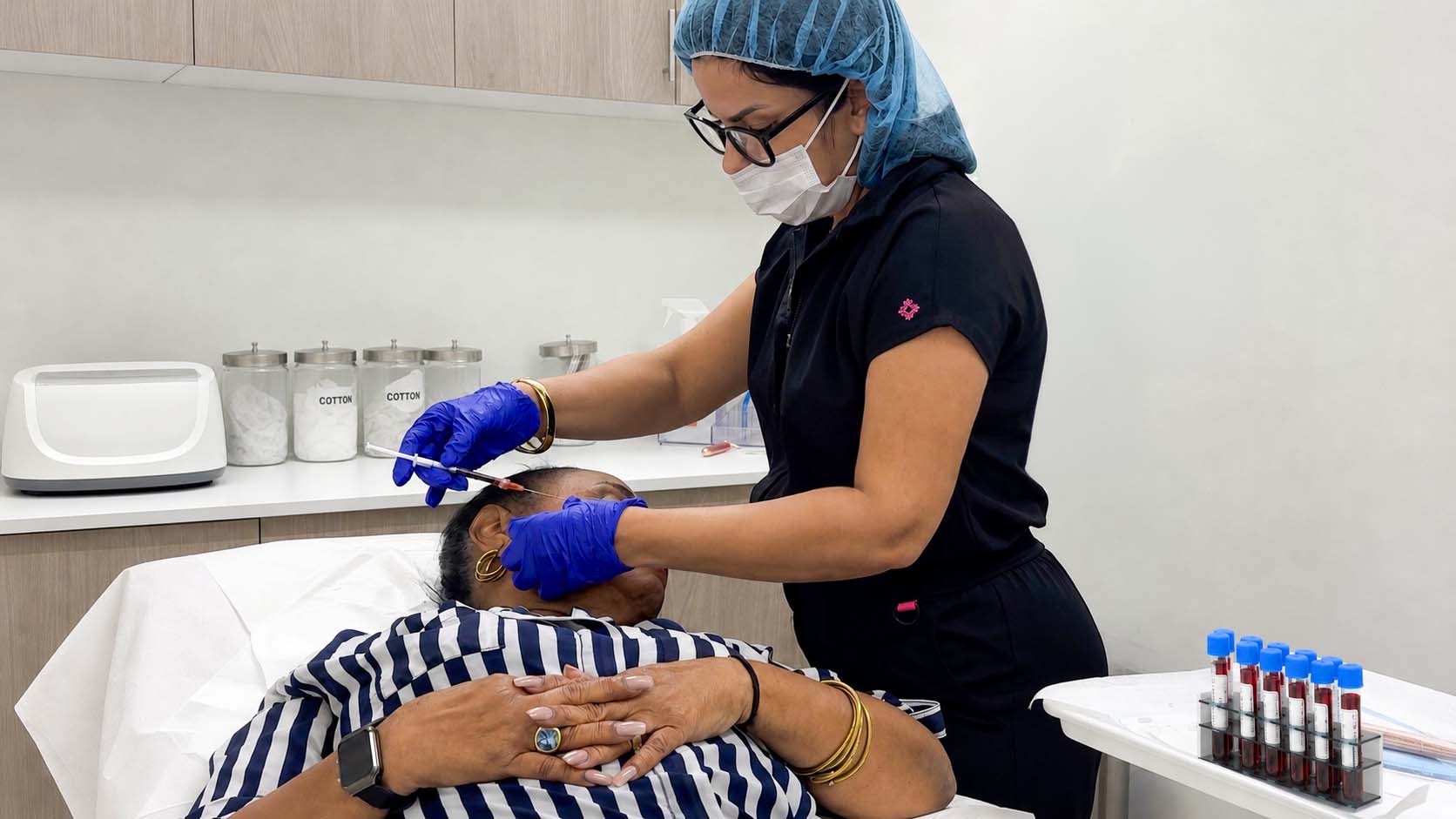
PRF is prepared from a small sample of the patient’s own blood.
Rather than creating the primary mechanical or thermal stimulus of treatments such as Microneedling or laser resurfacing, PRF provides an autologous fibrin matrix containing platelets and biological signaling components associated with tissue repair.
This is why we describe PRF as part of a regenerative strategy rather than simply another resurfacing technology.
PRF may be incorporated into personalized plans designed to support:
- Skin quality
- Tissue renewal
- Elasticity
- Fine lines
- Regenerative healing
For a complete explanation of the treatment, read our guide to What Is PRF Facial Rejuvenation?
Microneedling + PRF
Microneedling and PRF are sometimes used together because they contribute different components to a regenerative treatment strategy.
Microneedling creates controlled mechanical stimulation.
PRF provides an autologous biological component.
The combination is intended to support a healing and remodeling environment that may benefit texture, fine lines, selected acne scars, and overall skin quality.
If you want to understand this combination in greater detail, read Microneedling + PRF Benefits.
One important regulatory distinction should also be understood: the FDA states that it has not authorized microneedling devices specifically for delivery of blood products such as PRP into the skin, and has not evaluated the safety or effectiveness of combining microneedling devices with other products simply because the microneedling device itself is authorized.
CO₂ Laser Skin Resurfacing
CO₂ Laser takes a different approach to collagen remodeling.
Rather than relying on needles, the laser delivers controlled energy to the skin.
The treatment can address both visible surface damage and deeper remodeling, depending on the technology and treatment settings.
CO₂ resurfacing may be considered for concerns such as:
- Photoaging
- Fine lines and wrinkles
- Uneven texture
- Selected scars
- Visible sun damage
Because CO₂ treatment can be more intensive than some other rejuvenation procedures, recovery and patient selection become especially important.
Patients considering this option can read our complete guide to CO₂ Laser Skin Resurfacing: Benefits & Recovery.
PIXIE™ Multi-Layer Skin Rejuvenation
PIXIE™ provides another approach to skin remodeling by combining technologies that target different levels of the skin.
At Nature MedSpa, PIXIE™ combines:
- Radiofrequency Microneedling
- Erbium Laser technology
The objective is to address multiple aspects of skin quality within a personalized treatment strategy.
Rather than assuming that stronger treatment automatically means better treatment, the appropriate combination and intensity should depend on:
- Skin condition
- Treatment goals
- Skin type
- Previous procedures
- Recovery preferences
- Medical evaluation
Learn more in our guide to PIXIE™ Multi-Layer Skin Rejuvenation.
Collagen Stimulation vs. Adding Volume
This is another important distinction.
Collagen stimulation and volume restoration are not the same thing.
A patient experiencing significant facial volume loss may need structural support rather than—or in addition to—a collagen-focused treatment.
For example:
Collagen-Stimulating Treatments
Focus on skin quality, remodeling, texture, and firmness.
Dermal Fillers
Primarily provide structural volume and contour.
PRF
Focuses on regenerative tissue support rather than conventional immediate volumization.
This is why treatment should be selected according to the underlying concern instead of simply choosing whichever procedure is currently popular.
Patients trying to understand this distinction can read PRF vs. Fillers: Which One Is Right for You?
Which Collagen-Stimulating Treatment Is Right for You?
There is no single “best collagen treatment.”
The appropriate treatment depends on what needs to be corrected.
For example:
| Primary Concern | Treatment That May Be Considered |
| Fine lines & texture | Microneedling |
| Texture + regenerative support | Microneedling + PRF |
| Texture + firmness | RF Microneedling |
| Significant resurfacing needs | CO₂ Laser |
| Multi-layer rejuvenation | PIXIE™ |
| Regenerative skin support | PRF Facial Rejuvenation |
This table is educational, not a treatment prescription.
A patient’s skin type, pigmentation risk, medical history, anatomy, previous procedures, and recovery preferences may change the recommendation substantially.
How Long Does Collagen Remodeling Take?
Collagen remodeling is gradual.
This is one of the biggest differences between regenerative or collagen-stimulating treatments and procedures designed to create an immediate structural change.
Patients may notice early changes as the skin recovers, but remodeling may continue developing over the following weeks and months.
The timeline varies according to:
- Treatment performed
- Treatment intensity
- Age
- Skin condition
- Treatment area
- Number of sessions
- Individual healing response
- Lifestyle and sun exposure
Some patients may also require a treatment series or maintenance plan.
A responsible provider should therefore avoid promising that every patient will see the same result on the same timeline.
More Collagen Is Not Always Better
This is an important concept that is often missing from aesthetic marketing.
The goal of treatment is controlled remodeling, not simply creating as much inflammation or heat as possible.
More aggressive treatment does not automatically mean:
- More collagen
- Better skin
- Faster results
- Longer-lasting results
Excessive treatment can increase the risk of complications.
This is particularly important with energy-based procedures such as RF Microneedling. The FDA’s recent safety communication reinforces why treatment parameters, provider experience, and patient selection matter.
The objective should always be an appropriate biological response—not maximum treatment intensity.
Why Professional Evaluation Matters
The phrase “stimulate collagen” sounds simple.
Clinically, it is not.
Different technologies create different tissue responses at different depths.
A professional evaluation should consider:
- Skin type
- Skin thickness
- Texture
- Pigmentation
- Degree of photoaging
- Scarring
- Facial anatomy
- Medical history
- Previous aesthetic procedures
- Desired recovery time
- Treatment expectations
At Nature MedSpa, treatment planning is led by Yunet Fuentes, MSN, FNP-BC, Board-Certified Family Nurse Practitioner and Clinical Director.
Rather than selecting a treatment simply because it stimulates collagen, the goal is to determine which type of stimulation is appropriate for that patient’s skin.
Frequently Asked Questions
What is natural collagen stimulation?
Natural collagen stimulation refers to using a controlled treatment stimulus to activate the body’s own tissue repair and remodeling processes rather than simply adding collagen to the skin.
Can you naturally stimulate collagen in your face?
The body naturally produces and remodels collagen. Professional procedures such as Microneedling, RF Microneedling, and laser resurfacing can create controlled stimuli associated with collagen remodeling.
What treatment stimulates the most collagen?
There is no universal answer. Different treatments work at different depths and intensities, and the most aggressive treatment is not necessarily the most appropriate one.
Does Microneedling stimulate collagen?
Yes. Microneedling creates controlled micro-injuries that initiate a healing and remodeling response. FDA-authorized devices have indications that include improving facial wrinkles and acne scars, depending on the specific device.
Does Radiofrequency Microneedling stimulate collagen?
RF Microneedling combines needle penetration with thermal radiofrequency energy and is used to promote tissue remodeling. It also carries device-specific risks and should be performed by an appropriately trained licensed healthcare provider.
Does PRF stimulate collagen?
PRF contains platelets and signaling components involved in tissue repair and is used as part of regenerative treatment strategies intended to support tissue remodeling. Its mechanism differs from the controlled mechanical or thermal stimulation produced by Microneedling and energy-based devices.
Is collagen stimulation the same as filler?
No. Collagen-focused treatments primarily aim to improve tissue quality and remodeling, while dermal fillers are primarily used to add or restore structural volume and contour.
How long does collagen stimulation take?
Remodeling develops gradually over weeks to months. The timeline varies considerably by treatment and patient.
How many collagen treatments do I need?
There is no universal number. Treatment frequency depends on the technology used, skin condition, clinical goals, and individual response.
Is collagen stimulation permanent?
No aesthetic treatment stops the natural aging process. Improvements may persist for a period of time, but aging, UV exposure, lifestyle, and other biological factors continue to affect the skin.
Conclusion
Natural collagen stimulation is not about forcing the skin to change overnight.
It is about creating a controlled biological stimulus that encourages the body’s own repair and remodeling mechanisms to participate in skin renewal.
Microneedling provides mechanical stimulation.
Radiofrequency Microneedling combines mechanical stimulation with thermal energy.
PRF contributes an autologous regenerative component.
CO₂ Laser provides controlled resurfacing and remodeling.
PIXIE™ combines technologies to address different levels of the skin.
Each approach is different—and that is exactly why there is no universal “best collagen treatment.”
At Nature MedSpa, the objective is to identify the treatment strategy that makes sense for the patient’s skin, goals, medical history, and desired recovery rather than applying the same procedure to everyone.
Ready to Find the Right Collagen-Stimulating Treatment for Your Skin?
Schedule a personalized skin evaluation at Nature MedSpa.
Our approach begins by identifying what your skin actually needs before selecting a regenerative or energy-based treatment.
Nature MedSpa
📞 (305) 306-8626
💬 WhatsApp: (305) 482-3823