Skin changes caused by sun exposure, aging, acne, and the gradual loss of collagen can become increasingly difficult to address with skincare products alone.
Fine lines may deepen. Acne scars can remain visible long after breakouts have resolved. Years of sun exposure may create uneven tone and rough texture. Pores can appear more noticeable, and the skin may gradually lose some of its firmness and radiance.
CO₂ Laser Skin Resurfacing offers a more advanced approach.
This medical aesthetic treatment uses controlled laser energy to remove damaged surface tissue while stimulating the deeper renewal processes responsible for collagen production and skin remodeling.
At Nature MedSpa in Miami, CO₂ laser resurfacing is performed using advanced technology as part of a personalized treatment plan. The objective is not to create an artificial or overtreated appearance, but to improve skin quality, texture, tone, and firmness through controlled renewal.
In this guide, you will learn:
What CO₂ laser resurfacing is
How the treatment works
Which concerns it may improve
What recovery typically involves
How to prepare for treatment
Who may be a suitable candidate
Why professional skin evaluation is essential
TABLE OF CONTENTS
What Is CO₂ Laser Skin Resurfacing?
How Does a CO₂ Laser Work?
Ablative vs. Fractional CO₂ Resurfacing
What Concerns Can CO₂ Laser Improve?
Key Benefits of CO₂ Laser Resurfacing
What Happens During Treatment?
CO₂ Laser Recovery Timeline
Essential Aftercare Instructions
Who Is a Good Candidate?
Who May Need a Different Treatment?
CO₂ Laser and Miami’s Tropical Climate
CO₂ Laser vs. Other Rejuvenation Treatments
Frequently Asked Questions
WHAT IS CO₂ LASER SKIN RESURFACING?
CO₂ laser skin resurfacing is an advanced aesthetic treatment that uses carbon dioxide laser energy to create a controlled renewal response in the skin.
The laser targets damaged or aging tissue with precision. Depending on the treatment settings, it can remove portions of the outer skin layers while creating controlled thermal stimulation within deeper tissue.
This process encourages the skin to begin repairing itself.
During that renewal process:
- Damaged surface tissue is replaced
- New skin cells develop
- Collagen remodeling is stimulated
- Texture may become smoother
- Fine lines may soften
- Overall skin quality may improve
CO₂ resurfacing is more intensive than a standard facial or superficial treatment. Its strength is precisely why careful patient selection, preparation, customized settings, and post-treatment care are so important.
HOW DOES A CO₂ LASER WORK?
Years of sun exposure can gradually affect skin tone, texture, and collagen quality. To better understand how Miami’s tropical climate contributes to these changes, read our guide on sun spots and skin damage in Miami’s tropical climate.
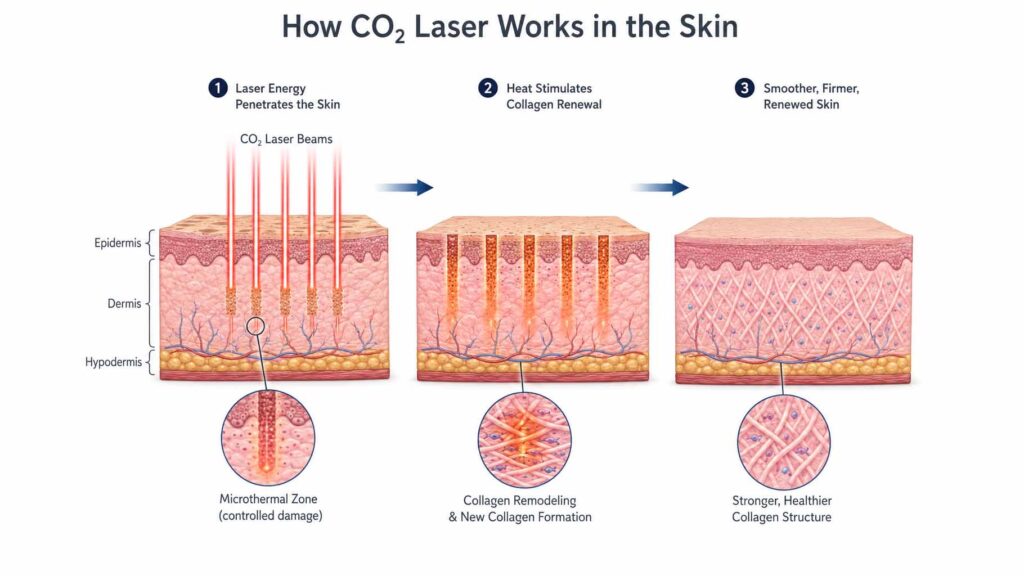
The CO₂ laser emits energy that is strongly absorbed by water within the skin.
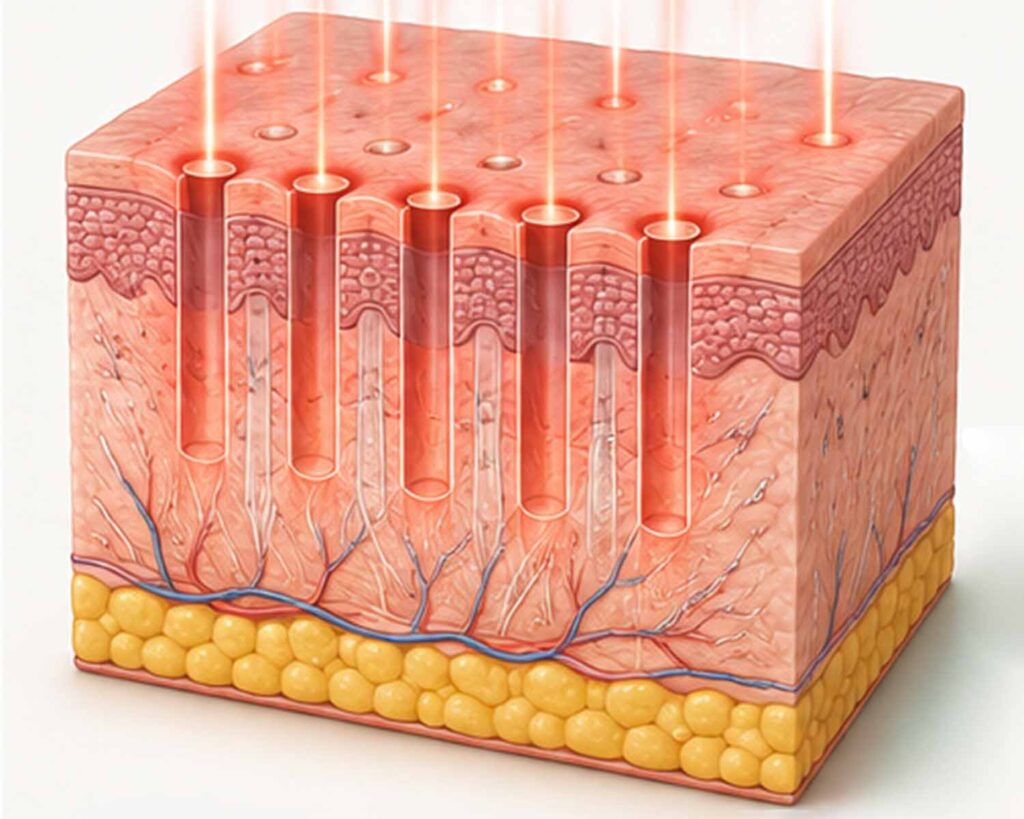
Because the skin naturally contains water, the provider can use this energy to create controlled columns or zones of treatment. The body responds by beginning a structured healing and regeneration process.
The treatment works in two complementary ways.
Surface renewal
Controlled removal of damaged outer tissue helps reveal newer skin underneath and may improve visible irregularities.
Deeper remodeling
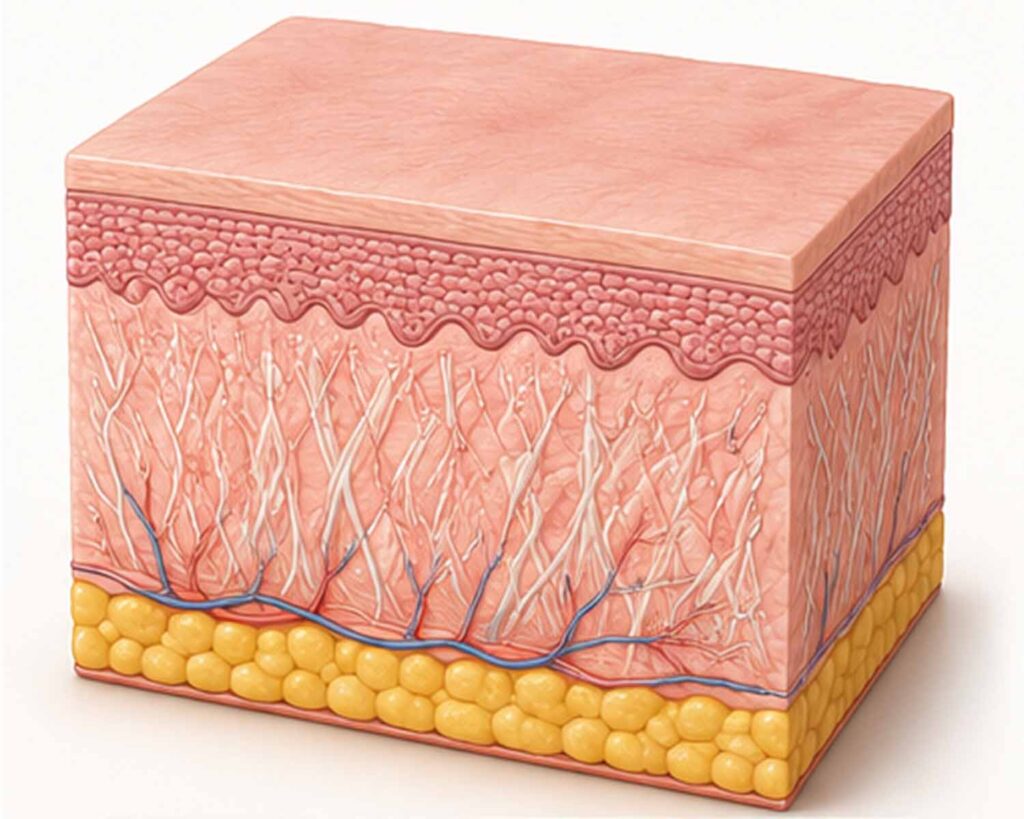
Thermal energy stimulates the tissue beneath the surface, supporting collagen contraction and continued collagen remodeling over time.
This means that improvement is not limited to what happens immediately after the skin heals. Skin quality may continue evolving as collagen renewal progresses.
ABLATIVE VS. FRACTIONAL CO₂ RESURFACING
Not every CO₂ treatment is identical.
Traditional fully ablative resurfacing treats a larger continuous surface area. It can produce substantial renewal but generally involves a more intensive recovery.
Fractional CO₂ resurfacing treats microscopic columns of skin while leaving surrounding areas untreated.
Those untreated areas help support the healing process, which may reduce recovery compared with older fully ablative approaches.
Treatment depth and intensity can be adjusted according to:
- Skin type
- Treatment area
- Severity of damage
- Desired level of correction
- Previous treatments
- Available recovery time
- Provider evaluation
The correct approach is not necessarily the strongest possible setting. It is the safest and most appropriate setting for the patient’s skin and goals.
WHAT CONCERNS CAN CO₂ LASER IMPROVE?
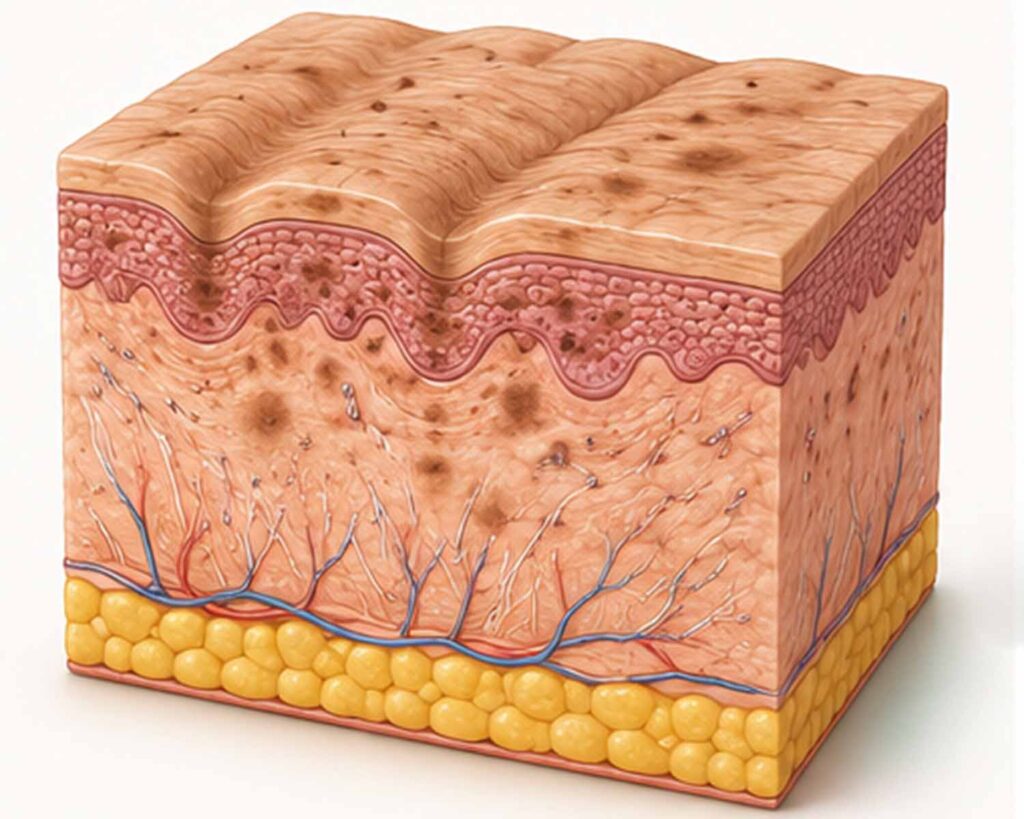
CO₂ laser resurfacing may be considered for several visible skin concerns.
Sun damage and photoaging
Years of ultraviolet exposure can lead to roughness, uneven tone, fine lines, and a dull complexion. Resurfacing removes damaged surface tissue while encouraging renewal.
Fine lines and wrinkles
The treatment may soften lines caused by photoaging and collagen loss, particularly when texture is also a concern.
Acne scars
Fractional CO₂ technology is frequently considered for selected atrophic acne scars because it stimulates remodeling within the scarred tissue.
Uneven skin texture
Patients with rough, irregular, or visibly damaged skin may experience improved smoothness after healing.
Enlarged-looking pores
Although no treatment permanently removes pores, resurfacing and collagen remodeling may reduce how noticeable they appear.
Certain pigmentation associated with sun damage
Some superficial discoloration related to photoaging may improve with resurfacing. However, not every form of pigmentation should be treated in the same way.
Melasma deserves particular caution. Heat and inflammation may aggravate this condition in some patients, so a professional diagnosis is essential before using an energy-based treatment.
Since melasma and isolated sun spots do not respond to treatment in the same way, understanding the difference between melasma and sun spots is essential before choosing a laser procedure.
Skin laxity and loss of firmness
CO₂ resurfacing may support a firmer appearance through collagen remodeling, but it is not a substitute for surgery and cannot correct significant sagging.
KEY BENEFITS OF CO₂ LASER RESURFACING
- Multiple concerns can be addressed
CO₂ resurfacing may simultaneously improve texture, fine lines, acne scars, visible sun damage, and general skin quality.
- It stimulates natural collagen remodeling
The treatment activates a natural repair response rather than simply covering or temporarily filling visible concerns.
- Treatment can be customized
The depth, density, and intensity may be adapted to the treatment area, skin condition, and recovery goals.
- Improvement can continue over time
Surface changes become visible as the skin heals, while deeper collagen remodeling may continue for weeks or months.
- It may complement other treatments
Depending on the patient’s needs, CO₂ laser resurfacing may form part of a broader rejuvenation strategy that includes PRF, skincare, or other technologies.
WHAT HAPPENS DURING A CO₂ LASER TREATMENT?
Every treatment should begin with a professional consultation.
During your evaluation, the provider may review:
- Your primary skin concerns
- Your skin type and tone
- History of hyperpigmentation or melasma
- Cold sore history
- Current medications
- Previous cosmetic treatments
- Sun exposure
- Smoking history
- Healing tendencies
- Available recovery time
Before treatment
You may receive personalized preparation instructions. These can include avoiding excessive sun exposure, pausing certain irritating skincare products, and following any prescribed preventive medication when appropriate.
Do not stop medications or begin new products unless instructed by your medical provider.
On treatment day
The skin is thoroughly cleansed. A topical anesthetic or another comfort measure may be used depending on the treatment plan.
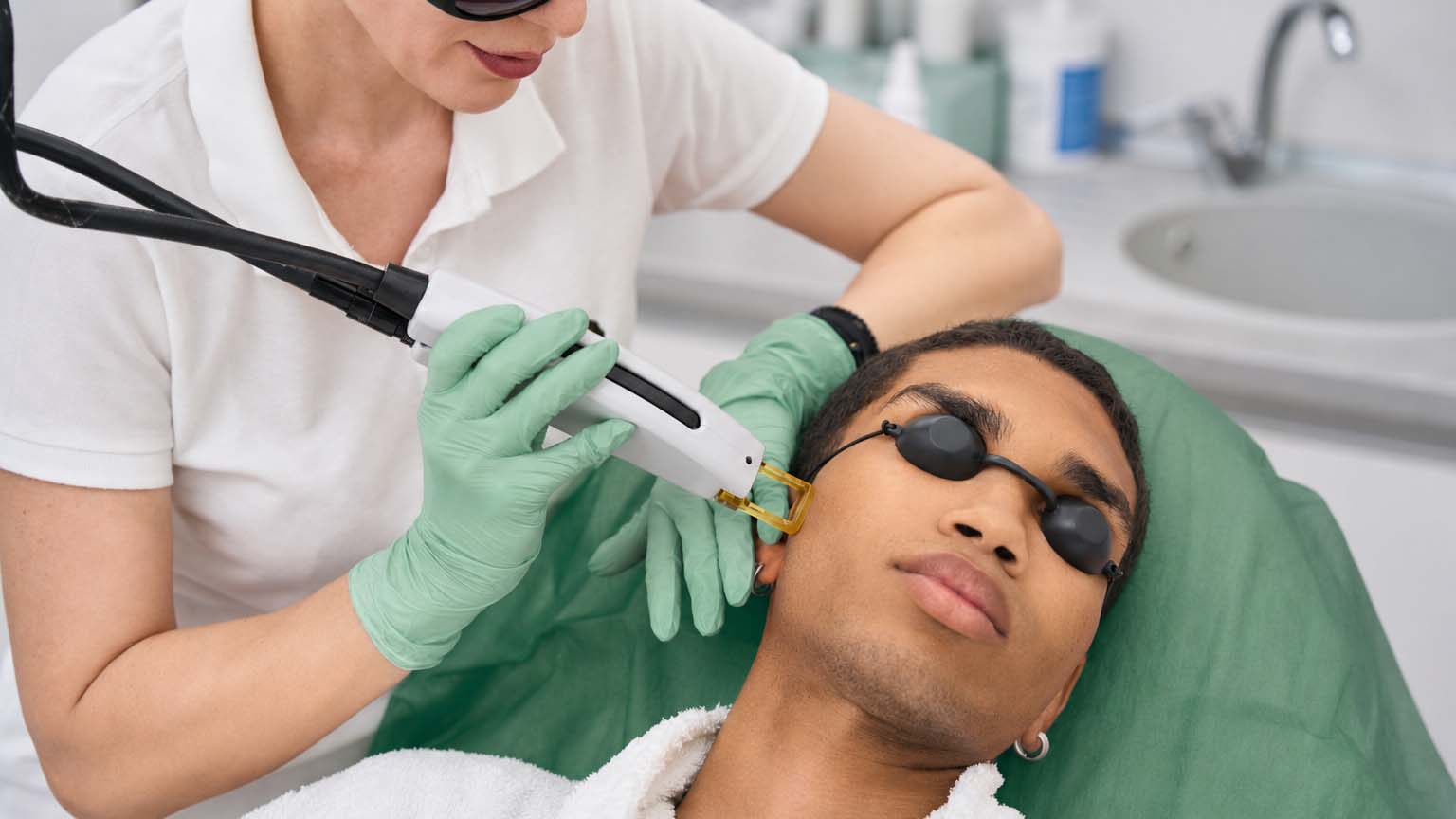
The provider then delivers controlled laser energy across the selected area using customized settings.
Treatment duration varies based on:
The size of the area
The depth of treatment
Whether a full face or targeted area is treated
The specific protocol selected
After treatment
The skin may appear red, warm, swollen, or similar to a strong sunburn. Detailed aftercare instructions are provided before you leave.
CO₂ LASER RECOVERY TIMELINE
Recovery is not identical for every patient.
The depth of resurfacing, treatment density, area treated, skin type, health history, and healing response all influence the timeline.
A general recovery pattern may look like this:
- First 24 to 48 hours
Redness, warmth, tenderness, and swelling may be most noticeable. The skin requires gentle care and strict adherence to the provider’s instructions.
- Days 2 to 4
Swelling may begin to decrease. The skin may feel tight and can begin to darken, flake, or form a temporary rough surface as part of the renewal process.
- Days 4 to 7
Peeling or flaking may become more noticeable. It is important not to pick, scrub, or prematurely remove healing skin.
- Days 7 to 14
Many patients see significant improvement in the visible healing process, although pinkness or sensitivity may remain. Deeper treatments can require a longer recovery.
- Following weeks
The surface continues settling and the complexion may gradually appear smoother. Residual redness can persist longer in some patients.
- Following months
Collagen remodeling continues beneath the surface. Improvements in texture and firmness may become progressively more noticeable.
This is only a general guide. Your personalized recovery instructions and timeline should always come from the provider treating you.
ESSENTIAL CO₂ LASER AFTERCARE
Following aftercare correctly is essential for healing and reducing avoidable complications.
- Use only approved skincare products
The skin barrier is temporarily vulnerable. Avoid introducing unapproved acids, retinoids, scrubs, fragrances, or active products.
- Keep the skin appropriately moisturized
Your provider may recommend a specific ointment, moisturizer, or wound-care protocol.
- Do not pick or peel the skin
Removing flakes or crusting prematurely may increase irritation, infection risk, scarring, or pigment changes.
- Avoid unnecessary heat
Hot showers, saunas, intense workouts, and other sources of heat may need to be avoided during the early recovery period.
- Follow cleansing instructions carefully
Use the method and products recommended by your provider. Do not scrub.
- Avoid direct sun exposure
Recently treated skin is especially sensitive to ultraviolet radiation.
- Use sun protection as directed
Once your provider confirms it is appropriate, use broad-spectrum sunscreen and physical sun protection such as hats and shade.
- Contact the clinic with concerns
Do not wait if you experience worsening pain, unusual drainage, blistering, spreading redness, fever, or another unexpected reaction.
WHO IS A GOOD CANDIDATE?
A suitable candidate may be someone who:
- Has visible sun damage
- Is concerned about fine lines or texture
- Has selected acne scars
- Wants a more comprehensive resurfacing treatment
- Understands that healing time is required
- Can follow detailed aftercare instructions
- Can avoid sun exposure during recovery
- Has realistic expectations
Suitability cannot be determined from a list alone. A professional consultation is necessary because skin tone, pigmentation history, health, and medications all affect treatment planning.
WHO MAY NEED A DIFFERENT TREATMENT?
CO₂ resurfacing may not be the first recommendation for everyone.
Additional caution or a different approach may be necessary for patients with:
- Active skin infections
- Open wounds in the treatment area
- Uncontrolled inflammatory skin conditions
- Certain pigmentation disorders
- A history of abnormal scarring
- Recent intense sun exposure or tanning
- Medications that interfere with healing
- Pregnancy or breastfeeding, depending on medical guidance
- Inability to complete post-treatment care
- Active melasma that may respond poorly to heat
Patients with deeper skin tones are not automatically excluded, but they may have a higher risk of post-inflammatory pigmentation changes. Careful evaluation, conservative settings, preparation, and aftercare are particularly important.
CO₂ LASER AND MIAMI’S TROPICAL CLIMATE
Receiving CO₂ laser resurfacing in Miami requires thoughtful planning.
South Florida residents experience strong ultraviolet exposure throughout much of the year. Heat, humidity, outdoor lifestyles, driving, beach activities, and frequent incidental sun exposure can complicate preparation and recovery.
Patients should plan treatment during a period when they can:
- Limit outdoor exposure
- Avoid beach and pool activities
- Use hats and shade consistently
- Follow sunscreen instructions
- Avoid sweating and excessive heat during early healing
- Attend follow-up appointments
The procedure can still be performed in Miami, but responsible timing and disciplined aftercare are essential.
CO₂ LASER VS. OTHER SKIN REJUVENATION TREATMENTS
CO₂ Laser vs. Q-Switched Laser
CO₂ laser resurfacing focuses broadly on skin renewal, texture, fine lines, scars, and photoaging.
Q-Switched technology is more specifically directed toward selected pigment targets, such as certain sun spots or tattoo pigment.
The better option depends on whether the primary concern is texture, pigmentation, scarring, or a combination.
CO₂ Laser vs. Microneedling with PRF
Microneedling with PRF stimulates collagen through controlled microchannels and regenerative support. It is generally less intensive than ablative CO₂ resurfacing.
CO₂ laser may be recommended when more significant resurfacing is desired, while microneedling with PRF may suit patients seeking a more gradual approach.
CO₂ Laser vs. PIXIE™
PIXIE™ combines radiofrequency microneedling and Erbium laser technology to address multiple levels of the skin.
CO₂ resurfacing provides a different pattern and intensity of controlled ablation. The best option depends on skin concerns, desired treatment intensity, and available recovery time.
CO₂ Laser vs. PRF Facial Rejuvenation
PRF uses the patient’s own biological material to support tissue renewal and collagen activity.
It does not resurface the skin in the same way as a CO₂ laser. The treatments may serve different purposes or be combined within a professionally designed rejuvenation plan.
CO₂ laser resurfacing is one of several technologies that may be considered within a personalized skin treatment plan. Compare the best treatments for hyperpigmentation to understand how CO₂, Q-Switched Laser, PRF, and other approaches differ.
WHY PROFESSIONAL EVALUATION MATTERS
A laser is not a one-size-fits-all treatment.
Using inappropriate settings or selecting the wrong technology for a pigmentation condition can increase the risk of prolonged redness, burns, infection, scarring, hyperpigmentation, or hypopigmentation.
A professional assessment helps determine:
- Whether CO₂ resurfacing is appropriate
- Which concerns can realistically improve
- Which intensity should be used
- How much recovery to expect
- Whether pretreatment is needed
- Which aftercare protocol is appropriate
- Whether another technology would be safer
At Nature MedSpa, treatment planning is based on the patient’s skin—not simply on the popularity of a device.
FREQUENTLY ASKED QUESTIONS
Is CO₂ laser resurfacing painful?
A topical anesthetic or other comfort measures may be used. Patients often describe heat, stinging, or discomfort, but the experience varies according to treatment intensity and individual sensitivity.
How long is the downtime?
Visible recovery may require approximately one to two weeks for many ablative CO₂ treatments, although lighter protocols may heal sooner and deeper treatments may require longer.
How many sessions will I need?
Some patients receive meaningful improvement after one treatment, while others may benefit from a series or complementary procedures. The recommendation depends on the condition being treated and the treatment intensity.
When will I see results?
Early improvement becomes visible as the skin heals. Texture and collagen-related changes may continue developing during the following weeks and months.
Can CO₂ laser remove acne scars completely?
No treatment can guarantee complete scar removal. CO₂ resurfacing may improve the appearance and texture of selected scars, but the degree of improvement varies.
Does CO₂ laser treat melasma?
CO₂ laser is not automatically the best treatment for melasma. Heat and inflammation may worsen melasma in some patients. A careful diagnosis and personalized treatment plan are essential.
Can CO₂ laser tighten the skin?
Collagen remodeling may improve firmness and create a tighter-looking appearance. However, it cannot correct significant sagging or replace surgical lifting.
Is CO₂ laser safe for darker skin tones?
It may be considered in selected patients, but darker skin tones can have an increased risk of post-inflammatory hyperpigmentation or other pigment changes. Provider experience, careful settings, and strict aftercare are critical.
Can I receive treatment during summer?
Treatment may be possible, but Miami’s intense sun exposure makes preparation and recovery more demanding. Patients must be able to avoid direct UV exposure and follow a strict protection plan.
Can CO₂ laser be used on areas other than the face?
Depending on the device, protocol, skin condition, and provider evaluation, selected areas such as the neck, chest, or hands may be considered.
How long do the results last?
Results depend on aging, lifestyle, sun exposure, skincare, and the condition treated. The procedure cannot stop future aging or new sun damage.
Can CO₂ laser be combined with PRF?
In selected cases, regenerative treatments may be incorporated into a broader treatment plan. The timing and combination should be determined by the treating professional.
CONCLUSION
CO₂ laser skin resurfacing is one of the most comprehensive technologies available for improving visible sun damage, rough texture, fine lines, selected acne scars, and overall skin quality.
Its benefits come from controlled resurfacing and the natural collagen-remodeling process that follows.
However, stronger technology does not automatically mean better treatment. Patient selection, customized settings, professional technique, preparation, and aftercare all influence safety and results.
At Nature MedSpa, CO₂ laser resurfacing is approached as a personalized medical aesthetic treatment. Every plan begins with an evaluation of the patient’s skin, concerns, pigmentation history, lifestyle, and recovery goals.
READY TO RENEW YOUR SKIN?
Schedule a personalized consultation at Nature MedSpa to discover whether CO₂ laser skin resurfacing is the right treatment for your skin concerns and recovery goals.
📞 (305) 306-8626
💬 WhatsApp: (305) 482-3823