If you’ve noticed dark patches or brown spots appearing on your skin, you’re not alone.
Many people assume every dark spot is caused by sun exposure, but that’s not always true. Two of the most common pigmentation concerns—melasma and sun spots—may look similar at first glance, yet they develop for very different reasons.
Understanding which condition you have is the first step toward choosing the right treatment.
At Nature MedSpa, we evaluate each patient’s skin individually because treating pigmentation successfully requires identifying its true cause—not just its appearance.
In this guide, we’ll explain how melasma differs from sun spots, what causes each condition, and which modern treatments may help improve your skin.
Table of Contents
- What Is Melasma?
- What Are Sun Spots?
- How Can You Tell the Difference?
- Why Does Miami Increase Both Conditions?
- Which Treatment Works Best?
- Can They Return?
- Frequently Asked Questions
What Is Melasma?
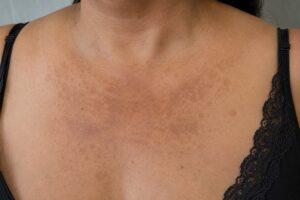
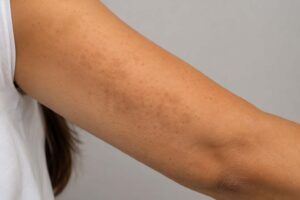
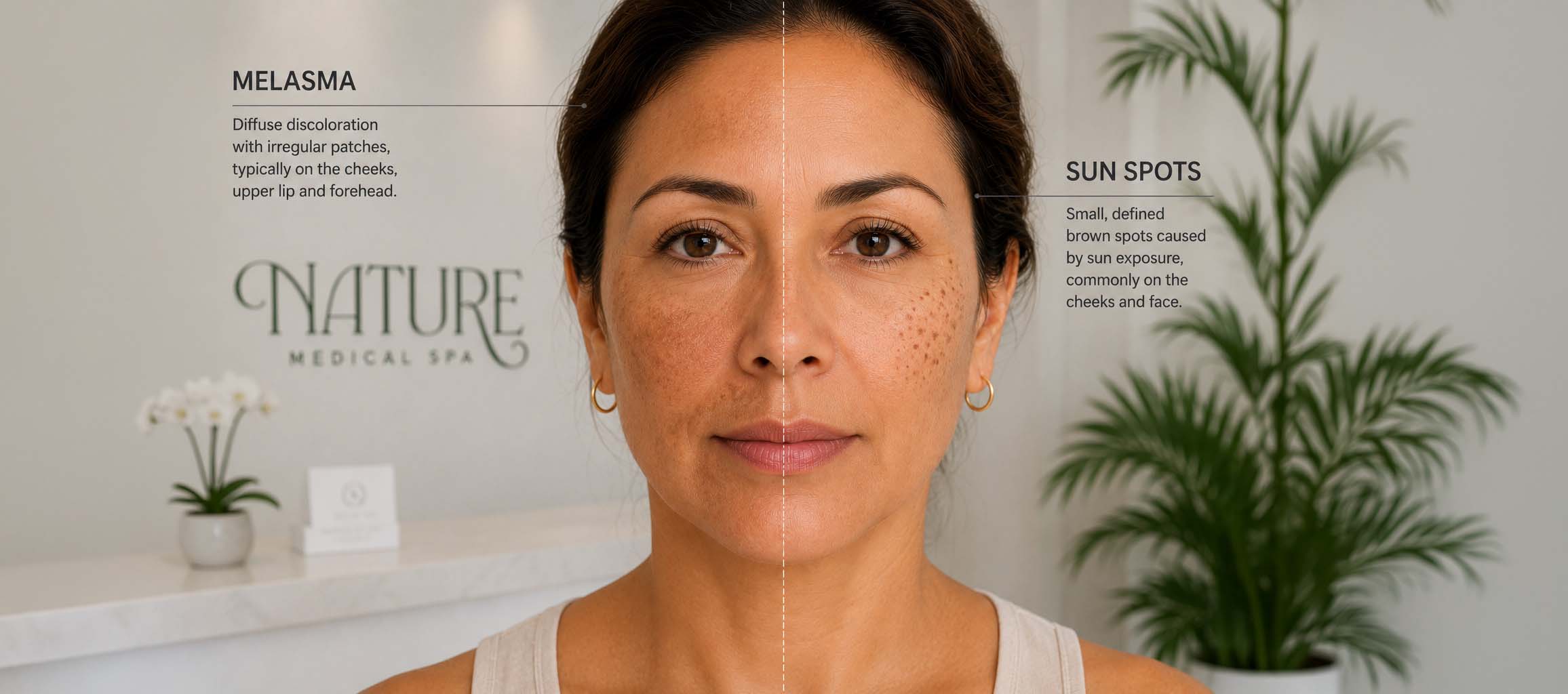
Melasma is a chronic pigmentation disorder that causes larger patches of brown or grayish discoloration.
It most commonly develops on:
- Cheeks
- Forehead
- Upper lip
- Chin
Unlike sun spots, melasma usually appears symmetrically on both sides of the face.
Several factors contribute to melasma, including:
- Hormonal changes
- Pregnancy
- Birth control
- Genetics
- Heat
- Ultraviolet exposure
Even indoor heat and visible light may worsen melasma in susceptible individuals.
What Are Sun Spots?
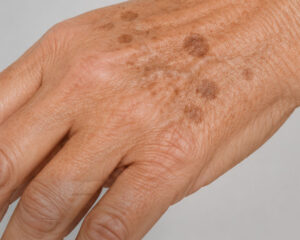
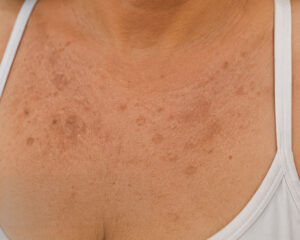
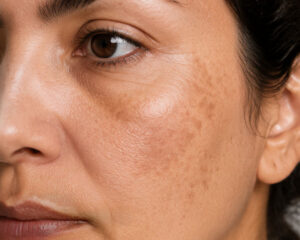
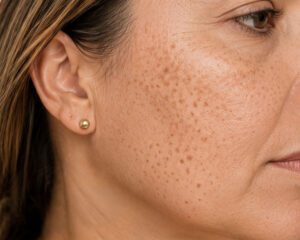
Sun spots—also called solar lentigines—develop after years of cumulative UV exposure.
They usually appear as:
- Small
- Flat
- Well-defined
- Brown lesions
Most commonly found on:
- Face
- Hands
- Chest
- Arms
- Shoulders
Unlike melasma, sun spots are individual lesions rather than larger patches.
Side-by-Side Comparison
| Melasma | Sun Spots |
| Large patches | Small individual spots |
| Hormones play a major role | Primarily caused by UV exposure |
| Usually symmetrical | Random distribution |
| Can worsen with heat | Mostly worsens with sun exposure |
| More common in women | Common in both men and women |
| Often chronic | Usually stable once developed |
Why Miami Makes Both Conditions Worse
Living in South Florida means your skin is exposed to ultraviolet radiation almost every day of the year.
This constant exposure can:
- Stimulate excess melanin production
- Trigger melasma flare-ups
- Accelerate photoaging
- Increase the number of sun spots
- Reduce collagen over time
That’s why daily sun protection is essential—even during cloudy days.
Which Treatment Is Best?
The answer depends entirely on the diagnosis.
At Nature MedSpa, we customize treatment plans according to the type of pigmentation and the overall health of your skin.
For Sun Spots
Depending on your skin condition, treatments may include:
✔ CO₂ Laser Skin Resurfacing
✔ Q-Switched Laser
✔ Skin rejuvenation therapies
For Melasma
Because melasma is more complex, treatment often focuses on long-term pigment management rather than simply removing discoloration.
Depending on the individual evaluation, recommendations may include:
✔ Q-Switched Laser
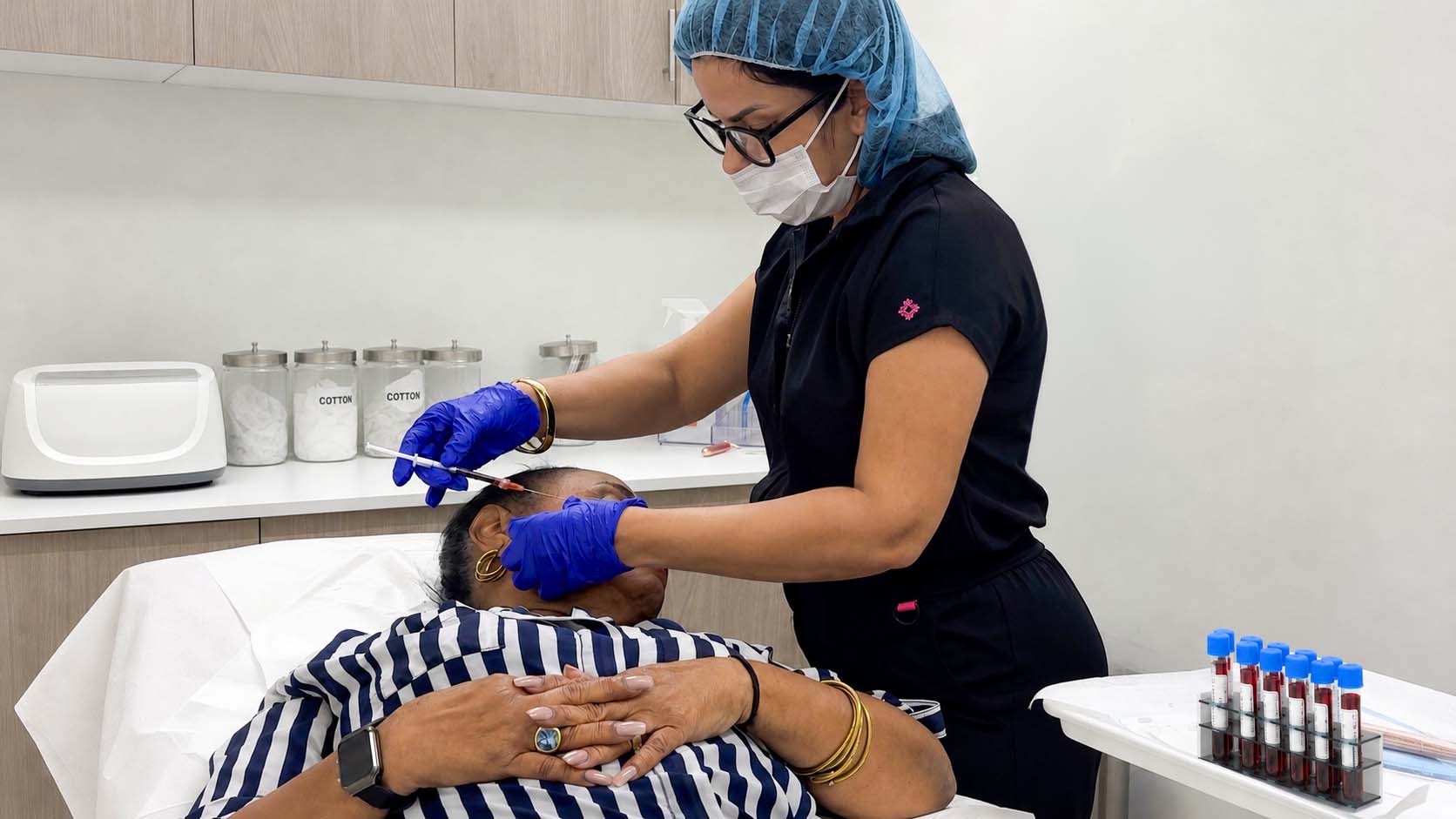
✔ PRF Facial Rejuvenation
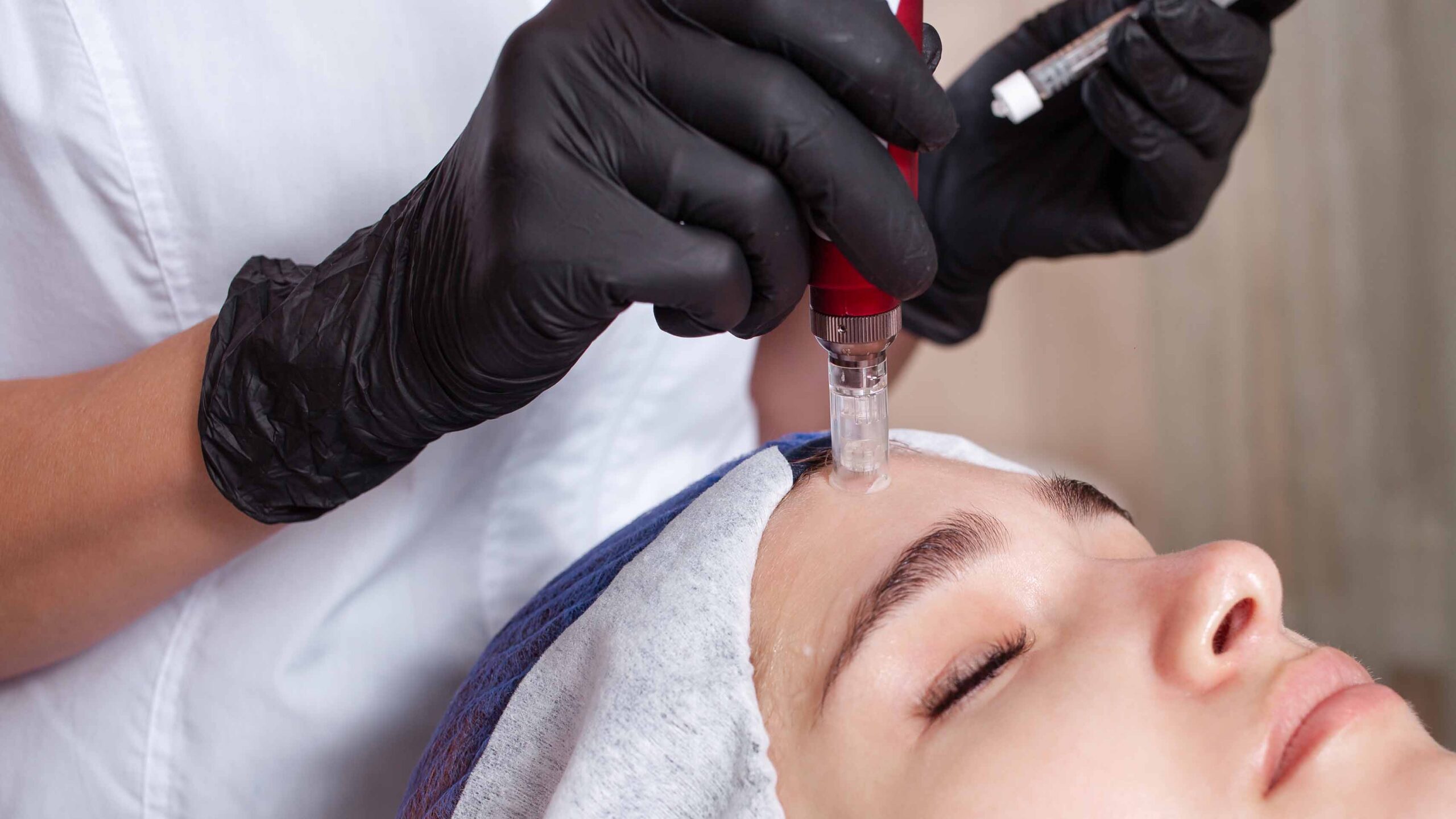
✔ Microneedling with PRF
✔ Personalized skincare protocols
A combination approach is often the most effective.
Although melasma and sun spots have different causes, both conditions may benefit from personalized treatment depending on the type of pigmentation, skin type, and overall skin health.
The best treatment varies depending on the type and depth of pigmentation. Learn more about the most effective options in our guide to Best Treatments for Hyperpigmentation.
Why Professional Diagnosis Matters
Many patients spend months—or even years—using over-the-counter creams that aren’t designed for their specific type of pigmentation.
Treating melasma as if it were a sun spot (or vice versa) can delay results and, in some cases, worsen the condition.
A professional skin evaluation helps identify:
- The type of pigmentation
- Its depth
- Possible triggers
- The most appropriate treatment plan
Can Melasma and Sun Spots Return?
Yes.
Both conditions can recur if the underlying triggers continue.
To help maintain results, we generally recommend:
- Daily broad-spectrum sunscreen
- Sun-protective clothing
- Consistent skincare
- Follow-up evaluations
- Personalized maintenance plans when appropriate
Frequently Asked Questions
Is melasma permanent?
Melasma is considered a chronic condition, but with the right treatment and maintenance plan, its appearance can often be significantly improved.
Are sun spots dangerous?
Most sun spots are benign, but any new or changing skin lesion should be evaluated by a qualified healthcare professional.
Can one person have both melasma and sun spots?
Yes. Many patients living in sunny climates like Miami have both conditions at the same time.
Which laser is better?
The most appropriate laser depends on the type of pigmentation, skin type, and clinical evaluation.
Does sunscreen prevent melasma?
Daily sun protection plays an important role in helping reduce flare-ups and preventing further pigmentation.
Not Sure What Type of Pigmentation You Have?
Our team at Nature MedSpa can evaluate your skin and recommend a personalized treatment plan based on your unique needs.
Schedule your consultation today and discover the best approach for healthier, more radiant skin.
📞 (305) 306-8626
💬 WhatsApp: (305) 482-3823